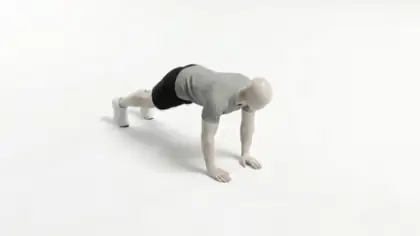
Mountain climber: how to do it, muscles worked and variations
Dynamic plank that alternates hip flexion and raises cardiovascular demand.
- Main muscles
- Rectus abdominis, Obliques, Iliopsoas
- Secondary muscles
- Deltoid, Quadriceps
- Equipment
- Bodyweight, BOSU balance trainer
- Variations
- 3
All 3 variations
Cross-body mountain climber
Mountain climber bringing each knee toward the opposite elbow, which adds oblique work to the conditioning.
Form. From a high plank, bring one knee diagonally toward the opposite elbow and alternate at a steady rhythm without raising your hips.
Common mistake. Raising the hips, bouncing on your hands, or losing the alignment of your shoulders over your wrists.
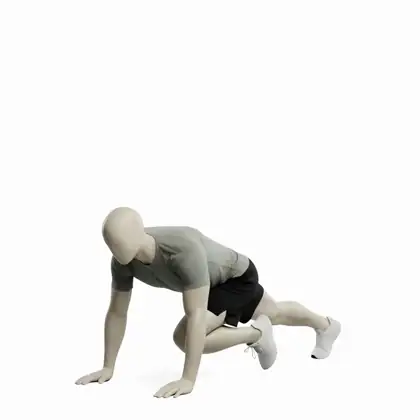
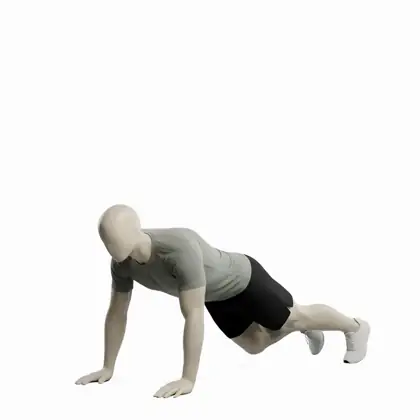
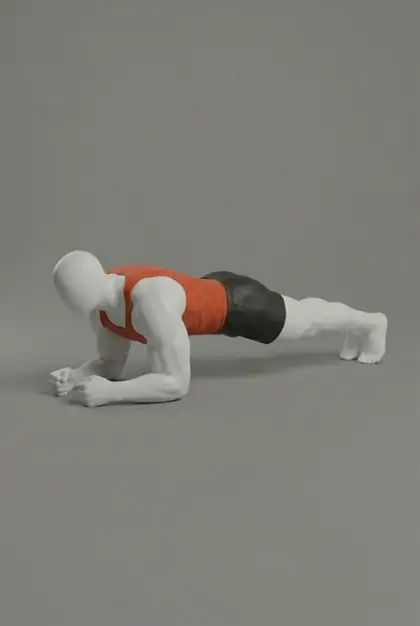
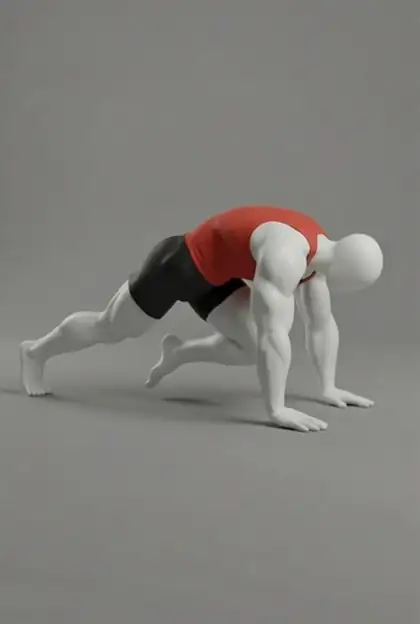
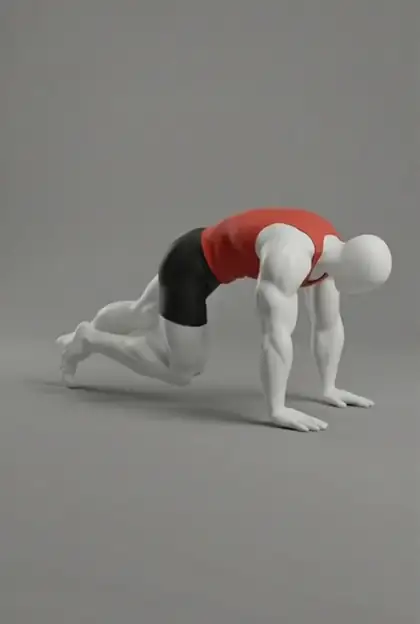
Mountain climber
Fast alternating hip flexion from a plank, useful for conditioning and core control.
Form. Actively push into the floor, keep your shoulders over your hands and bring each knee in without letting the pelvis rotate excessively.
Common mistake. Bouncing without control, lifting the hips a lot, or loading the wrists with the shoulders behind the hands.

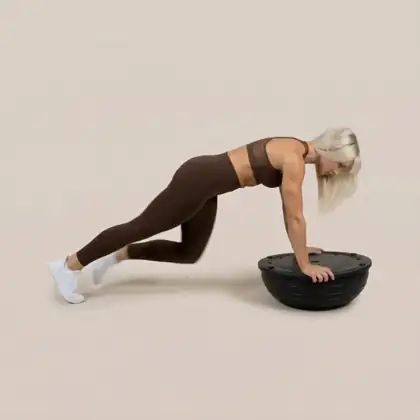
Mountain climber with hands on a BOSU
Mountain climber with your hands on a BOSU, a progression that adds shoulder and trunk stability to the cyclic movement.
Form. Place the BOSU on a non-slip floor, plant your hands firmly and alternate knees without letting the pelvis drop.
Common mistake. Using an unstable base too soon, jumping without control, shrugging your shoulders, or sinking the lower back as you speed up.
Other exercises for the same muscles