Deadlift: how to do it, muscles worked and variations
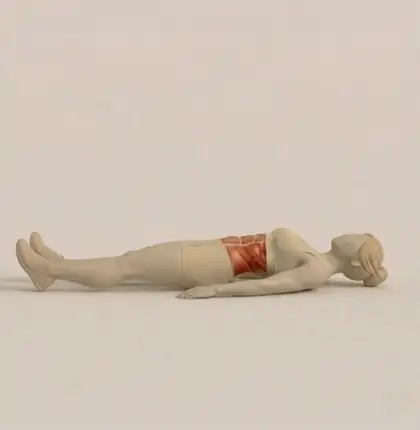
You lift a bar off the floor until you are standing, then put it back. In the conventional version the erector spinae and gluteus maximus lead, with the quads, hamstrings and lats behind them.
- Main muscles
- Gluteus maximus, Hamstrings, Quadriceps, Erector spinae, Adductors, Trapezius
- Secondary muscles
- Latissimus dorsi
- Equipment
- Barbell, Resistance band, Trap bar
- Variations
- 7
How to do it
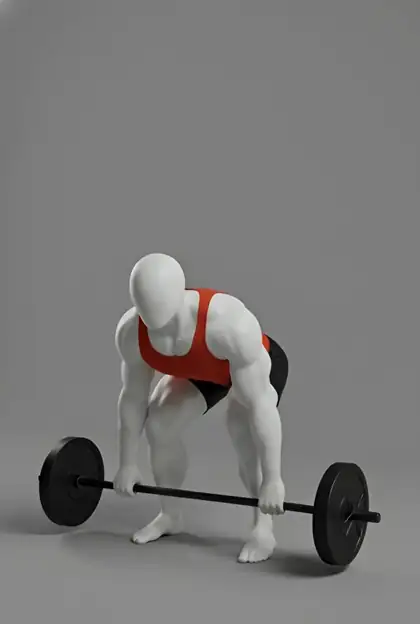
- Set the bar over the middle of your foot, almost brushing your shins, with your feet hip-width apart. The reference height comes from 45 cm plates; with lighter loads, raise it on blocks.
- Push your hips back to reach it and grip just outside your legs.
- Lift your chest and squeeze your armpits as if you had a newspaper clamped under each, which tightens the lats.
- Pull gently until the bar takes up the slack against the plates, and only then push the floor away. Yanking it is the classic mistake: the hips shoot up and the bar swings forward.
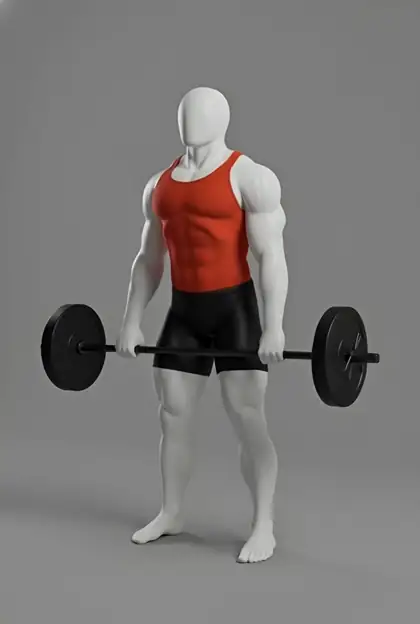
- Finish standing, without leaning back. On the way down your hips go first, then your knees.
Which muscles it works
The Sumo deadlift puts the adductors alongside the gluteus maximus as main muscles. Standing inside the bar, the Trap bar deadlift hands the lead to the quads and glutes, and the shrug at the end adds the trapezius. The Barbell stiff-leg deadlift loads the glutes and hamstrings.
Which variation to choose
The Trap bar deadlift is usually the easiest to learn. Between the Conventional deadlift and the Sumo deadlift, your proportions decide: try both with a moderate load and keep whichever lets you hold a firm back and a close bar. If hamstrings are the priority, look at the Romanian deadlift.
All 7 variations
Conventional deadlift
Heavy hinge from the floor with a barbell.
Form. Push the floor away and extend your hips while keeping the bar close.
Common mistake. Pulling with a rounded back or letting the bar drift away.
Sumo deadlift
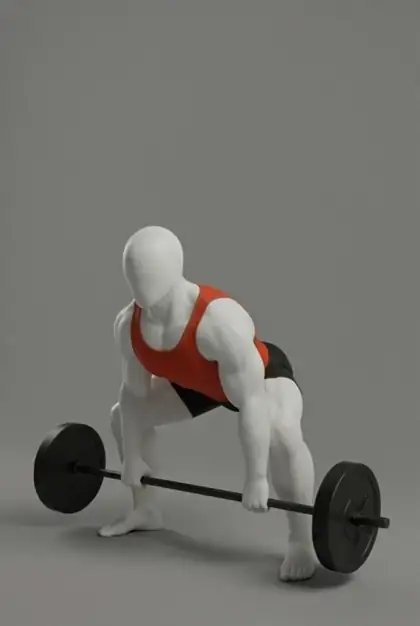
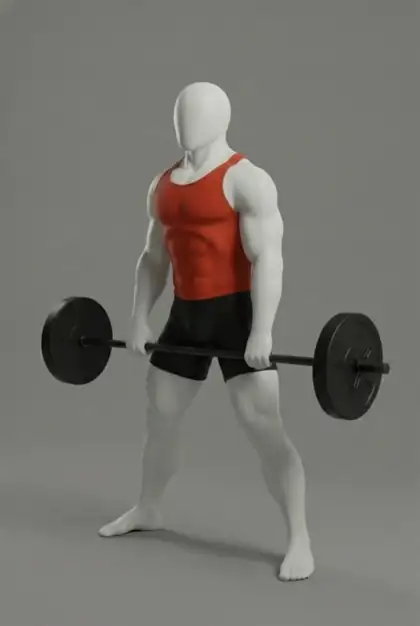
Deadlift with a wide stance and hands inside the legs.
Form. Open your knees, bring your hips close to the bar and push the floor away.
Common mistake. Starting with the hips too high or letting the bar drift away.
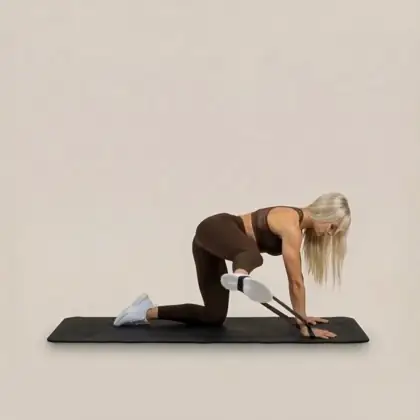
Banded deadlift
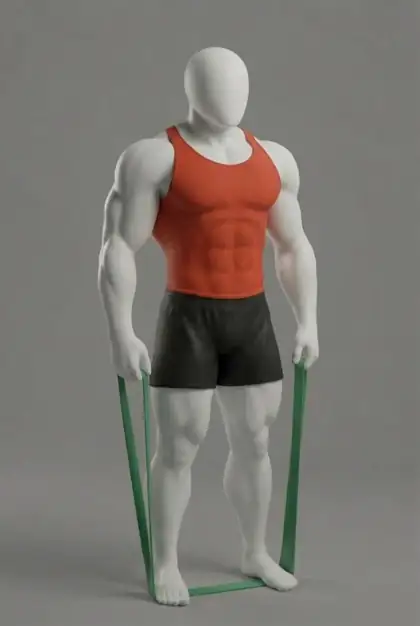
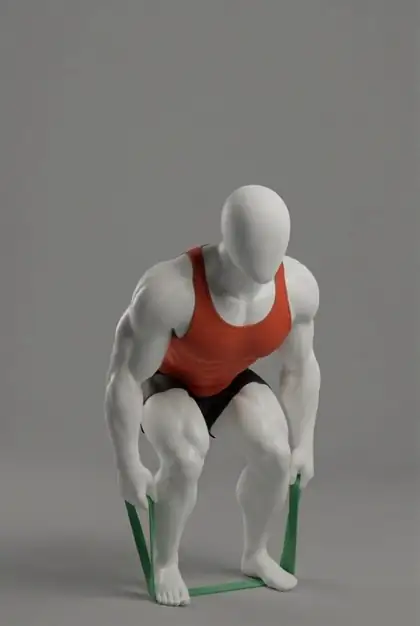
Hip hinge stepping on an elastic band, whose resistance rises as you stand up and reinforces the final lockout with the glutes.
Form. Stand on the band with feet hip-width apart, grip it with a neutral back and hips back, and stand up pushing the floor away until your hips and knees are extended; lower with control.
Common mistake. Rounding the back, pulling with the arms, letting the band slide under your feet, or hyperextending the lower back at the end.
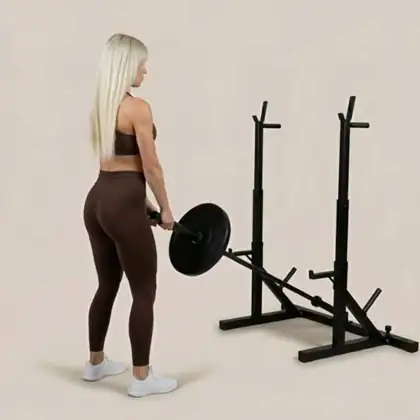
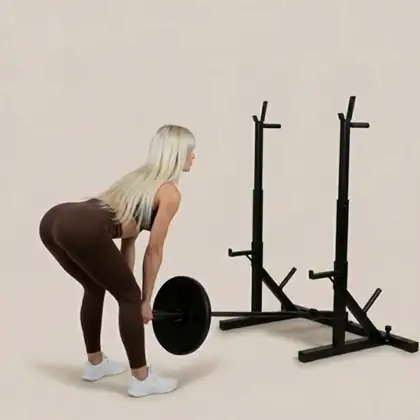
Landmine deadlift
Deadlift with the end of a bar anchored to the floor, whose arc path helps you learn the hip hinge with the load close to the body.
Form. Stand with the end of the bar in front of your feet, grip it with both hands, send your hips back with a neutral back and stand up pushing the floor away until you are tall with active glutes.
Common mistake. Using an anchor that shifts, rounding the spine to reach the bar, pulling with the arms, or hyperextending the lower back at the end.
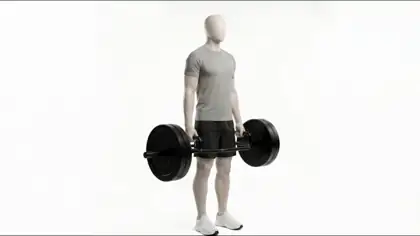
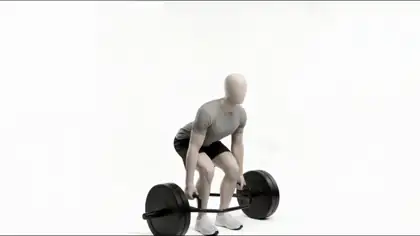
Trap bar deadlift
Deadlift using a trap bar with a neutral grip.
Form. Keep your center of mass inside the bar and lift with control.
Common mistake. Sitting back too far or locking the knees abruptly.
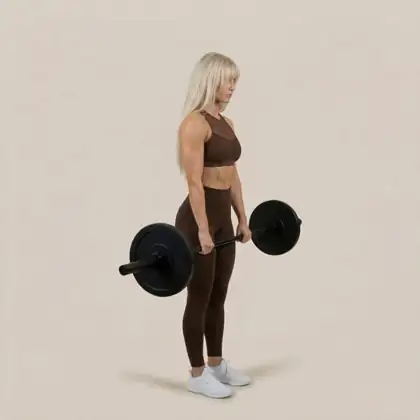
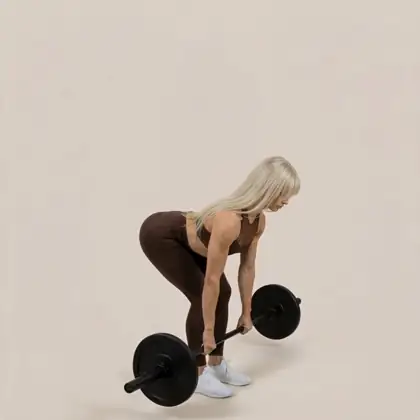
Barbell stiff-leg deadlift
Hip hinge with a barbell and nearly straight knees that stretches and heavily loads the hamstrings.
Form. With a minimal, fixed knee bend, send your hips back sliding the bar close to your legs, lower until you feel tension in the hamstrings without rounding your back and return driving your hips forward.
Common mistake. Fully locking the knees, rounding the lower back to go lower, letting the bar drift away from the legs, or pulling with the back instead of the hips.
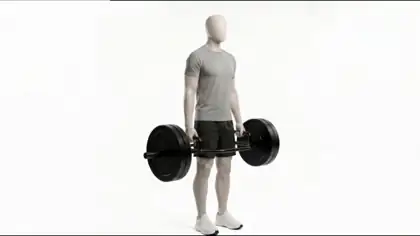
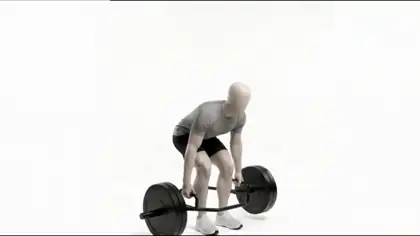
Trap bar deadlift with shrug
Hex bar deadlift that ends with a shoulder shrug at the top, adding trapezius work to the pull.
Form. Inside the trap bar, grab the handles with a neutral back, extend your hips and knees until you are standing and, without bending your elbows, raise your shoulders toward your ears; lower the shoulders and then the bar.
Common mistake. Shrugging before finishing the deadlift, rolling the shoulders, bending the elbows, or rounding the back at the bottom.
Frequently asked questions
- Is sumo cheating?
- No. It shortens the bar's path for many people, but it also asks for more hip opening, and it does not favour everyone equally.
- Is the deadlift bad for your back?
- It loads your lower back heavily, and that load is easier to tolerate if you build up gradually. If you already have pain or an ache will not go away, speak to a professional before adding weight.
Other exercises for the same muscles