Lat pulldown: how to do it, muscles worked and variations
Sitting down, you pull a cable bar towards your upper chest. It mainly trains the latissimus dorsi, and its advantage over the pull-up is that you choose the weight, so it works at any level.
- Main muscles
- Latissimus dorsi
- Secondary muscles
- Biceps brachii, Rhomboids, Trapezius, Deltoid, Brachialis, Teres major
- Equipment
- Cable
- Variations
- 6
How to do it
- Set the pad so it holds your thighs without squeezing. If you lift off the seat on hard sets, it is too high.
- Take the bar while standing and sit down with it, arms straight.
- Lean back a little, just enough for the bar to clear your face, and lift your chest.
- Bring your shoulders down first, then drive your elbows in to your sides until the bar reaches your upper chest.
- Let it rise under control until your arms are straight. With too much weight your trunk leans further each rep, and what remains is a row with a high bar.
Which muscles it works
The latissimus dorsi drives every version and the biceps brachii always helps. With an underhand grip the biceps contributes more, because it bends the elbow most easily with the palm facing you. With an overhand grip the rhomboids and trapezius do more to hold the shoulder blade.
Which variation to choose
Neutral, underhand or close: all three train the lats, so choose on comfort. The Close neutral-grip lat pulldown tends to be the gentlest on shoulders and wrists, and the Underhand-grip lat pulldown will let you move a bit more weight. The Medium overhand-grip lat pulldown is a sound starting point and the Wide overhand-grip lat pulldown shortens the range. The Single-arm lat pulldown and the Kneeling cross-cable pulldown help you feel each side.
All 6 variations
Medium overhand-grip lat pulldown
Vertical pull with an overhand grip at medium width.
Form. Start by depressing your shoulder blades and bring the bar down to the upper chest.
Common mistake. Turning it into a row by leaning the torso back too much.
Single-arm lat pulldown
Single-arm vertical pull on a cable.
Form. Let the shoulder blade rotate upward and pull the elbow toward your side.
Common mistake. Rotating the trunk to complete the rep.
Underhand-grip lat pulldown
Vertical pull with an underhand grip.
Form. Keep your elbows in front of your body and finish near the chest.
Common mistake. Excessive biceps dominance from lack of scapular control.
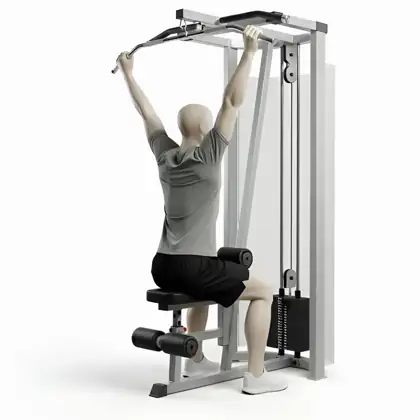
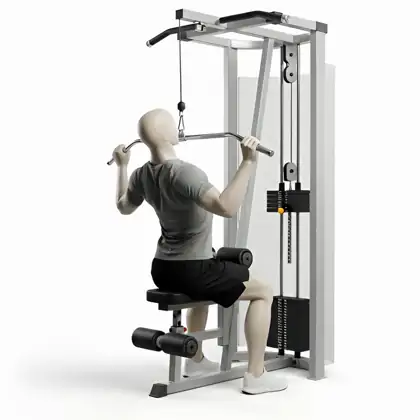
Wide overhand-grip lat pulldown
Vertical pull with a wide grip.
Form. Control the return and avoid shortening the range to chase more load.
Common mistake. Cutting the range and raising the shoulders.
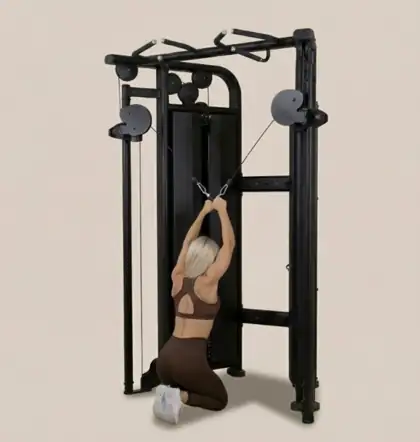
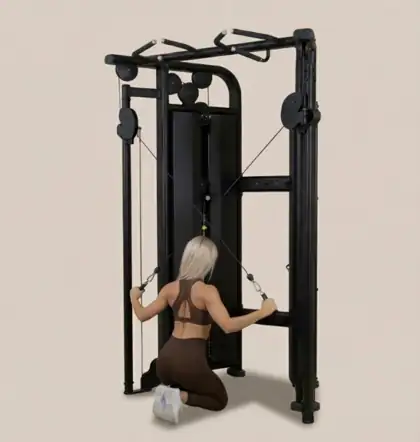
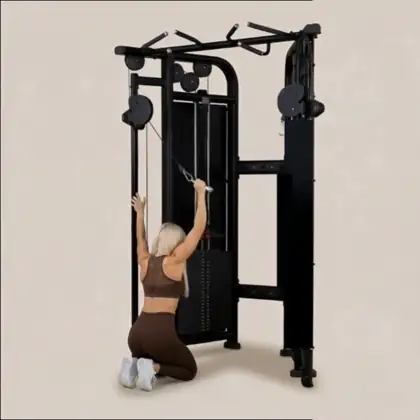
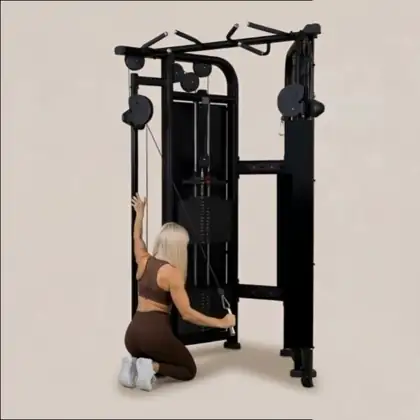
Kneeling cross-cable pulldown
Kneeling pulldown between two high cables with the cables crossed, which lets you bring your elbows to your ribs following the line of the lats.
Form. Kneel in the center of the station with a handle in each hand and the cables crossed overhead, pull bringing your elbows down and back to your sides and return with control until the lats are stretched.
Common mistake. Leaning the trunk back to help, shrugging your shoulders, pulling with the arms instead of the elbows, or letting go of the weight on the way up.
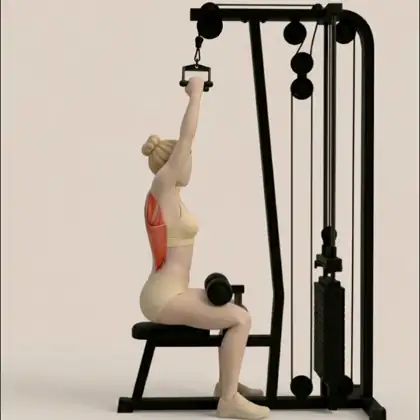
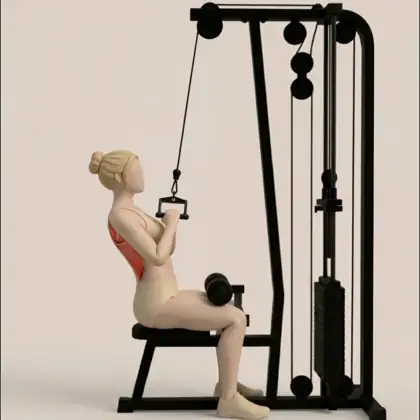
Close neutral-grip lat pulldown
Vertical pull with a close, neutral grip.
Form. Pull your elbows toward your ribs while keeping the torso stable.
Common mistake. Leaning back too much or pulling with momentum.
Frequently asked questions
- Are behind-the-neck pulldowns any use?
- They add little that the front version does not, and they ask for a shoulder rotation many people find uncomfortable.
- Lat pulldown or pull-ups?
- If you can already do several clean pull-ups, use both. If you are not there yet, the pulldown is how you train the movement.
Other exercises for the same muscles