Hip thrust: how to do it, muscles worked and variations
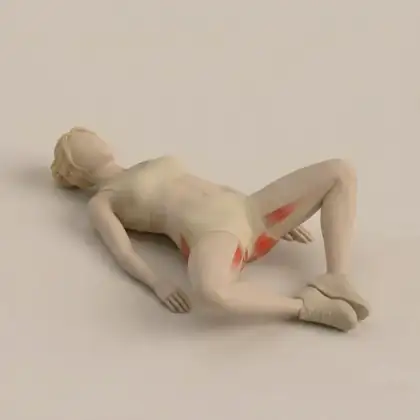
With your upper back on a bench and the load across your hips, you drive your pelvis upwards. It mainly trains the gluteus maximus, helped by the hamstrings, and it is hardest at the top, where a squat is lightest.
- Main muscles
- Gluteus maximus
- Secondary muscles
- Hamstrings, Gluteus medius, Adductors
- Equipment
- Barbell, Bodyweight, Dumbbell, Resistance band, Kettlebell, Flat bench
- Variations
- 6
How to do it
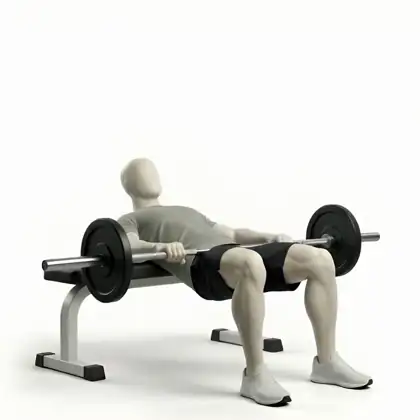
- Sit on the floor with the bench edge at the lower tip of your shoulder blades.
- Roll the bar to the crease of your hips, with a pad. With 45 cm plates it clears your thighs; with small plates you will have to lift it.
- Plant your feet at a distance that leaves your shins vertical at the top. Further away you will feel your hamstrings, and closer in, your quads.
- Push through the whole foot until your hips line up with your shoulders and knees, and stop there. The usual mistake is chasing extra height by arching your lower back.
Which muscles it works
The gluteus maximus leads in every version, with the hamstrings helping. With a band around your knees, the gluteus medius and adductors work to keep them apart. On one leg, the gluteus medius stops your pelvis tilting.
Which variation to choose
The Barbell hip thrust takes the most load. The Single-leg hip thrust and the Dumbbell B-stance hip thrust need far less weight and help even out the sides. The Barbell KAS hip thrust shortens the range. The Kettlebell and band hip thrust and the Kneeling landmine hip thrust avoid setting up the bar.
All 6 variations
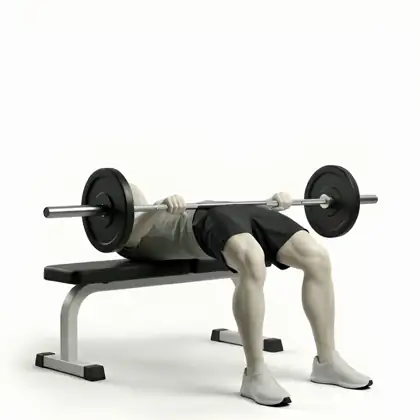
Barbell hip thrust
Hip extension with a barbell and back support.
Form. Push through firm feet and finish with a controlled pelvis.
Common mistake. Hyperextending the lower back at the top.
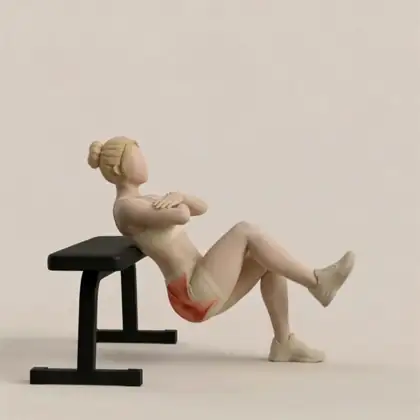
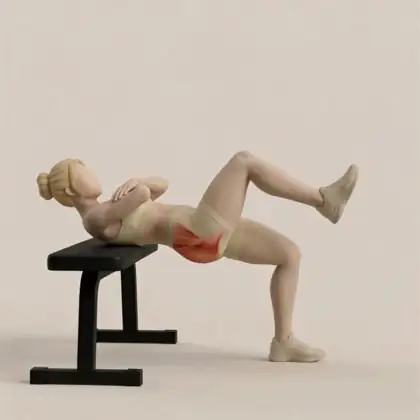
Single-leg hip thrust
Single-leg hip thrust with back support.
Form. Keep the pelvis level and extend from the glute.
Common mistake. Rotating the hip or losing foot support.
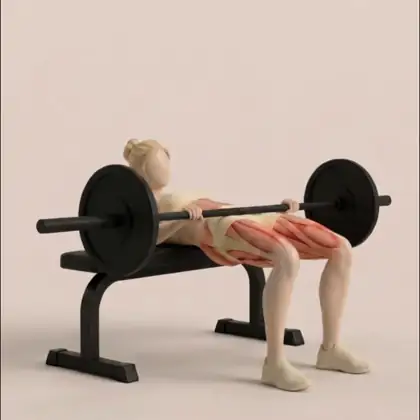
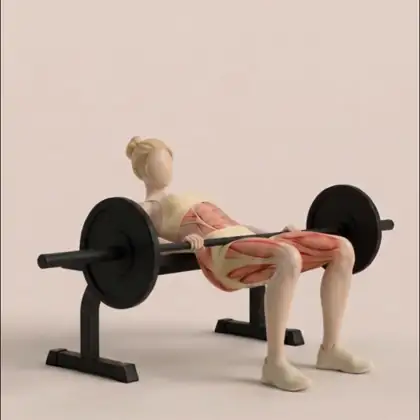
Barbell KAS hip thrust
Short-range hip thrust with constant tension aimed at the glutes using a barbell.
Form. Keep the pelvis stable, limit the range to where tension is maintained and control the descent without resting at the bottom.
Common mistake. Bouncing, hyperextending the lower back, or turning it into a full hip thrust without control.
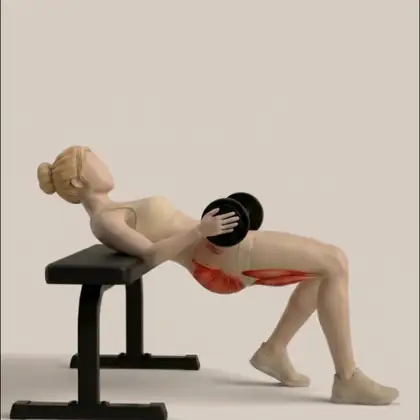
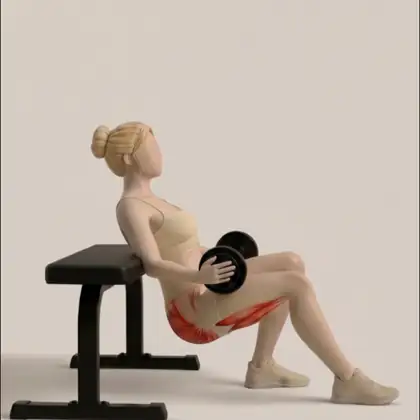
Dumbbell B-stance hip thrust
Hip thrust with a staggered stance that biases the load toward one leg while the other gives light assistance.
Form. Place the working foot close, the other slightly forward, and raise your hips without rotating the pelvis.
Common mistake. Pushing equally with both feet, hyperextending the lower back, or losing knee alignment.
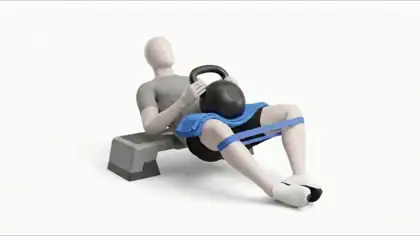
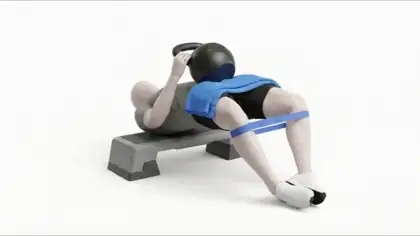
Kettlebell and band hip thrust
Hip thrust with the upper back supported, a kettlebell on the pelvis and a band around the knees to combine hip extension with abduction control.
Form. Support your shoulder blades steadily, drive through your heels, push gently out against the band and finish with a neutral pelvis.
Common mistake. Hyperextending the lower back, letting the knees drop, using a support that moves, or choosing a load you cannot reposition safely.
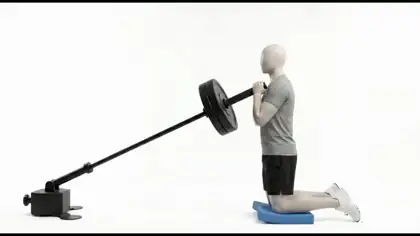
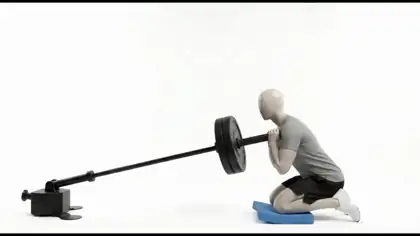
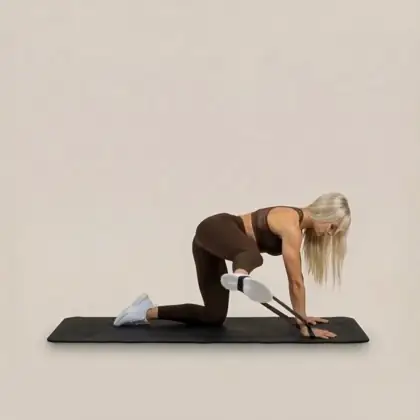
Kneeling landmine hip thrust
Kneeling hip extension holding the end of a landmine bar against the chest, which loads the glute in the final part of the movement.
Form. Kneel on a padded surface with the end of the bar at your chest, bring your hips toward your heels with a neutral trunk and drive your hips forward squeezing your glutes until you are aligned.
Common mistake. Arching the lower back instead of extending the hip, kneeling without padding, letting the bar move away from the chest, or lowering without control.
Frequently asked questions
- Hip thrust on a machine or with a barbell?
- It is the same movement. A machine saves you setting up the bar; a barbell is in nearly every gym. The technique does not change.
- Can you do it at home?
- Yes, with a firm sofa against the wall. On one leg your own weight is already hard, and later you can add a kettlebell.
- Does it replace the squat?
- No. The squat loads the glutes at another point in the range and trains your quads as well.
Other exercises for the same muscles