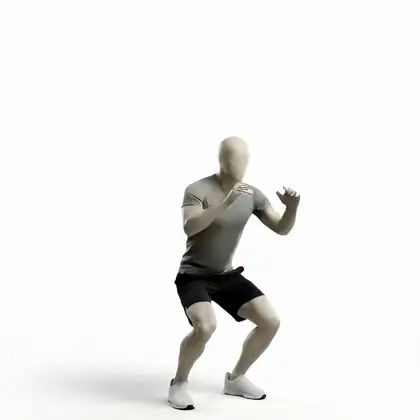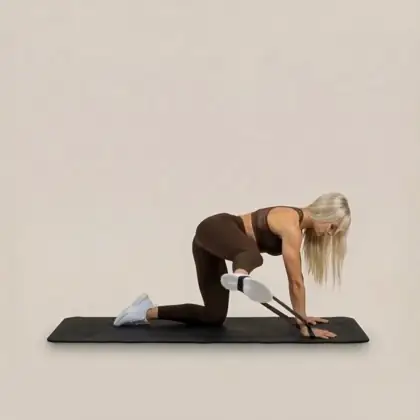
Squat: how to do it, muscles worked and variations
You bend your hips and knees together, then stand up by pushing the floor away. That movement mostly trains the quadriceps, with the gluteus maximus and adductors in support.
- Main muscles
- Quadriceps, Gluteus maximus, Adductors
- Secondary muscles
- Gluteus medius
- Equipment
- Barbell, Dumbbell, Kettlebell, Smith machine, Resistance band, Hack squat machine, Bodyweight, Weight plate
- Variations
- 9
How to do it
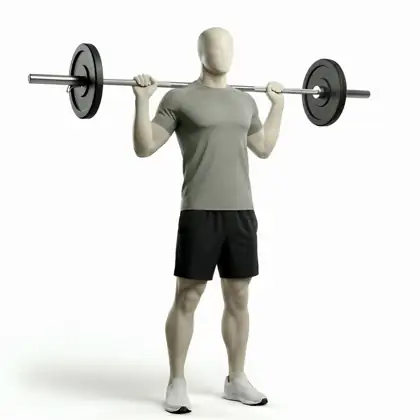
- With a bar, work inside a rack with the safeties a little under your lowest point, and rest it on your traps rather than your neck.
- Set your feet about shoulder-width apart with your toes turned out a little. Adjust until going down feels natural.
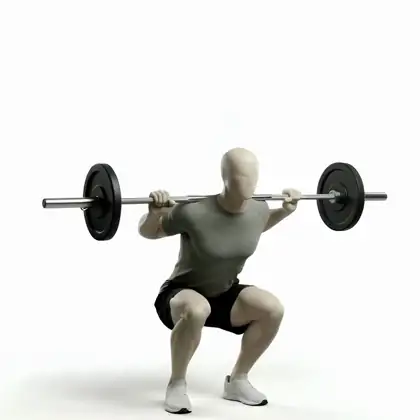
- Breathe in, brace your abdomen and go down with your knees following your toes.
- Descend as far as you can keep your heels down and your back firm, which for plenty of people means hips level with the knees or below.
- Drive up through the whole foot. This is where it tends to go wrong: the hips rise before the chest and the squat turns into a hinge.
Which muscles it works
The quadriceps straighten the knee and lead in nearly every version, while the gluteus maximus extends the hip and works harder near the bottom. The adductors help you out of the hole, and in the Sumo squat with floor tap they count among the main muscles.
Which variation to choose
To learn, the Goblet squat. The Barbell back squat takes the most load; if your ankles hold you back, try the Heels-elevated barbell back squat or the Barbell front squat, which both keep your trunk more vertical. The Hack squat machine and the Smith machine squat take balance out of the problem.
All 9 variations
Barbell back squat
Squat with a barbell on your back.
Form. Descend with control and push the floor away to stand up.
Common mistake. Losing trunk tension or letting the knees collapse.
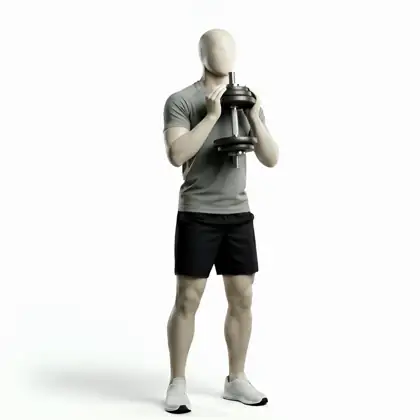
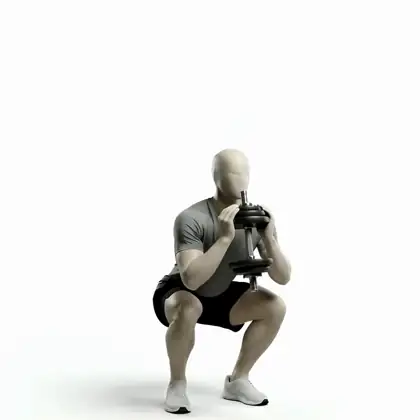
Goblet squat
Squat holding a load in front of the torso.
Form. Keep the load close and aim for a controlled depth.
Common mistake. Relaxing the core on the way down.
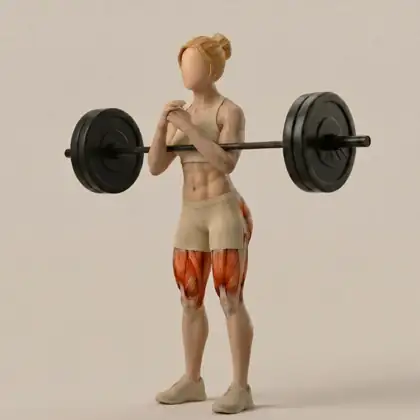
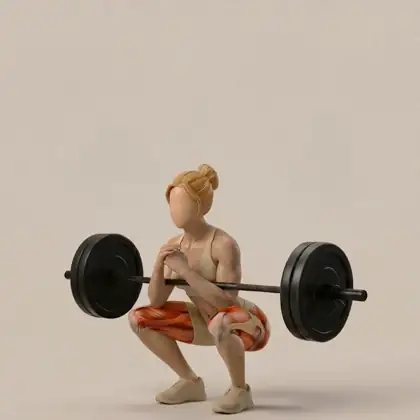
Zercher squat
Squat with the barbell held in the crooks of the elbows.
Form. Keep the bar close to the torso and brace hard.
Common mistake. Rounding the upper back from losing tension.
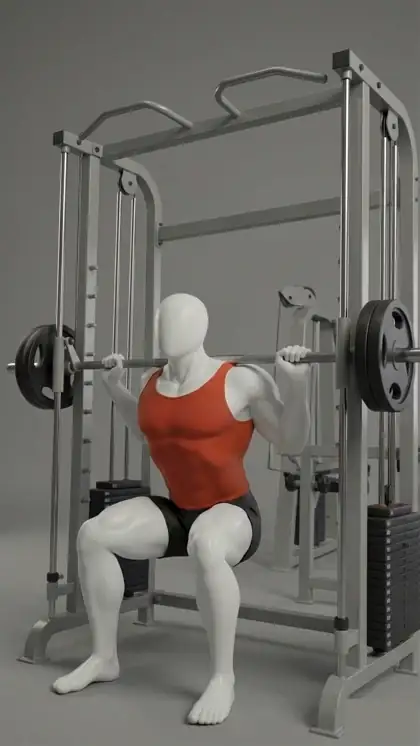
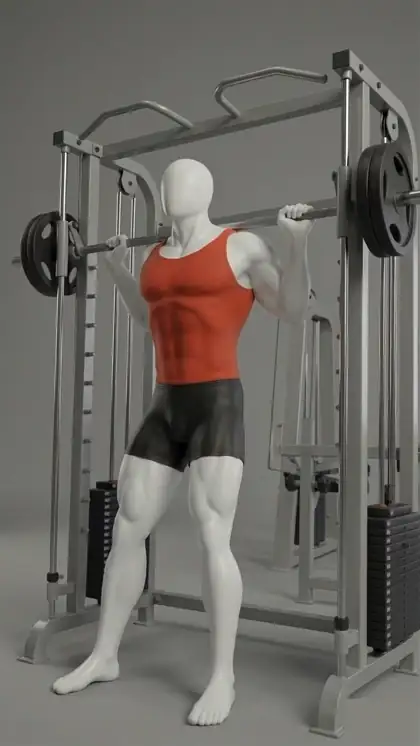
Smith machine squat
Guided squat on the Smith machine.
Form. Place your feet and the bar for a comfortable path.
Common mistake. Forcing a foot position that bothers the knees or hips.
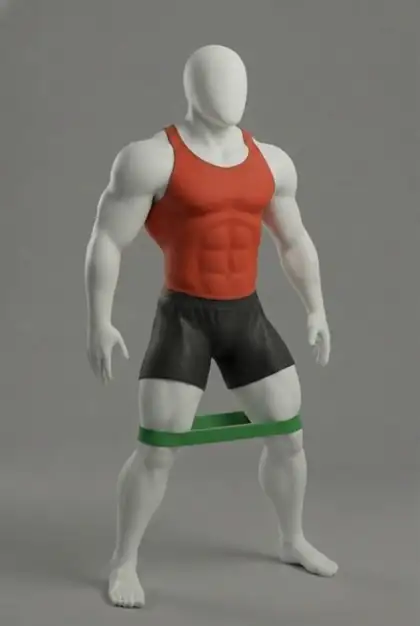
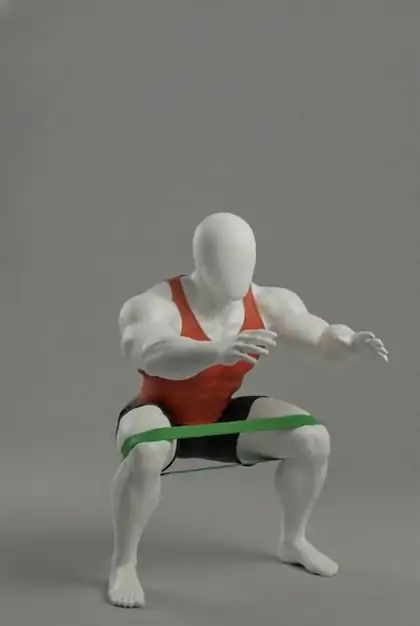
Mini-band squat
Squat with a short band around the knees that makes you push outward and activates the gluteus medius.
Form. Place the mini band just above your knees, set your feet hip-width apart and lower keeping band tension with knees aligned with your feet; stand up without letting them close in.
Common mistake. Letting the band pull the knees together, shifting weight onto the toes, losing tension on the way up, or using a band that prevents clean technique.
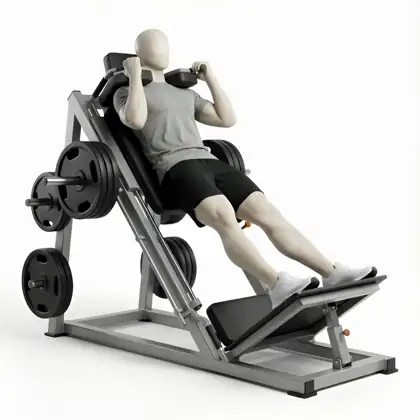
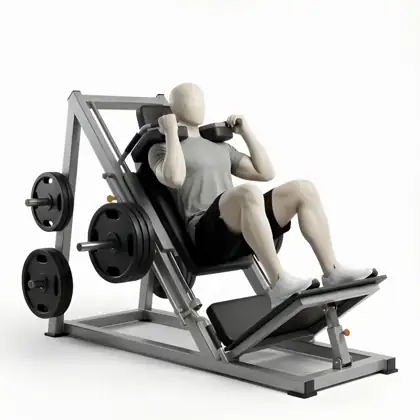
Hack squat machine
Guided squat on a hack machine.
Form. Adjust the platform and keep a comfortable range.
Common mistake. Lifting the pelvis or locking out violently.
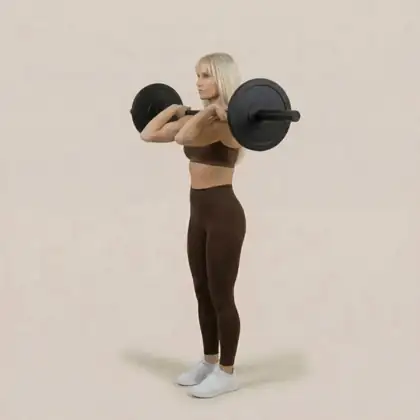
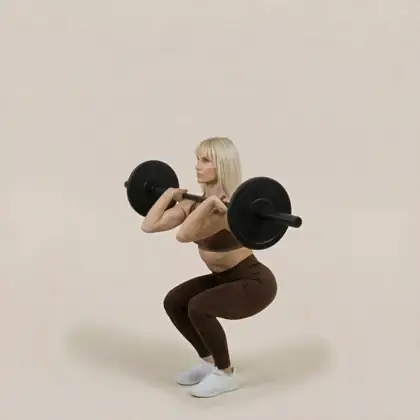
Barbell front squat
Squat with a barbell in the front rack position.
Form. Keep your elbows high and your torso firm on the way down.
Common mistake. Losing the bar by dropping the elbows.
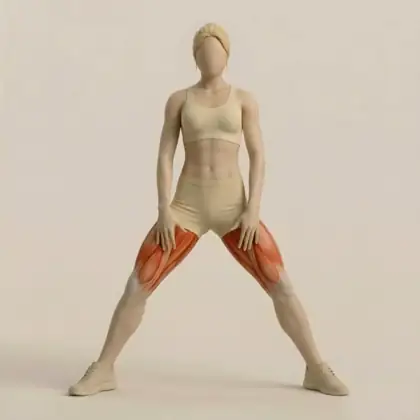
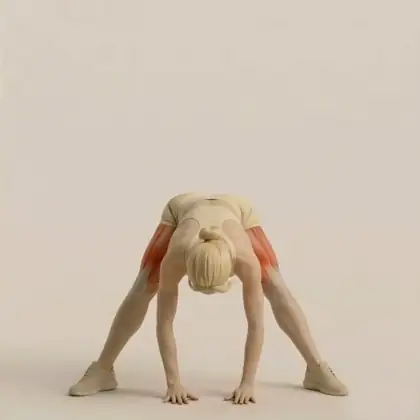
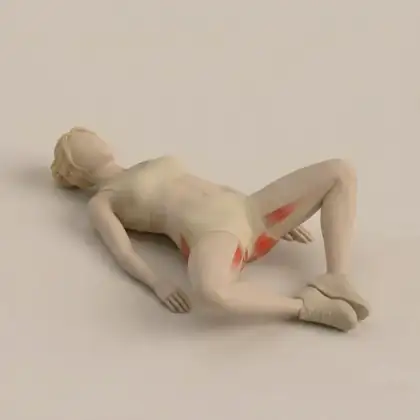
Sumo squat with floor tap
Squat with a very wide stance in which you lower until one hand touches the floor, alternating, as dynamic hip mobility.
Form. With your feet wider than your hips and toes out, lower into a squat keeping your chest high and touch the floor with one hand; stand up and repeat with the other.
Common mistake. Rounding the back to reach the floor, bringing the knees together, lifting the heels, or bouncing at the bottom.
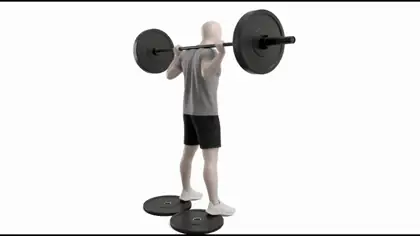
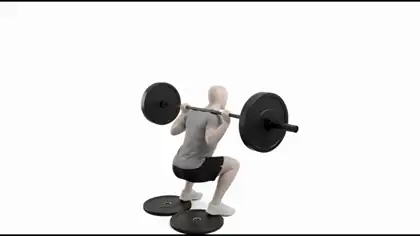
Heels-elevated barbell back squat
Squat with the barbell on your back and heels on plates or a wedge, which allows a more vertical trunk and biases the work toward the quads.
Form. Place your heels on thin, stable plates, rest the bar on your traps, lower sending your knees forward along the line of your feet and stand up pushing through your whole foot without dropping the chest.
Common mistake. Using an unstable or too-high riser, letting the knees go inward, losing trunk tension at the bottom, or lifting the toes off.
Frequently asked questions
- Can your knees go past your toes?
- Yes. It depends on your legs and ankles, and holding them back on purpose only makes you lean further. The sensible check is that they follow the line of your foot and your heel stays down.
- Why do my knees cave in on the way up?
- It usually shows up near your limit. A small movement as you leave the bottom is common; if it is getting worse, drop the weight.
Other exercises for the same muscles