Pull-ups: how to do it, muscles worked and variations
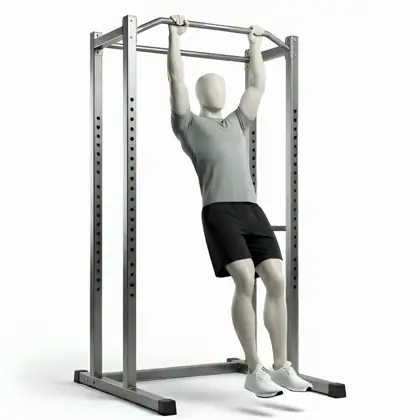
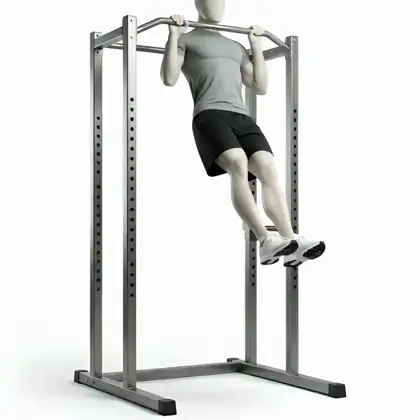
Hanging from a bar, you pull your own weight up until your chin clears it. The latissimus dorsi does the main work and the biceps brachii helps in every version.
- Main muscles
- Latissimus dorsi
- Secondary muscles
- Biceps brachii, Rhomboids, Trapezius, Brachialis, Teres major
- Equipment
- Bodyweight, Pull-up bar, Selectorized machine
- Variations
- 4
How to do it
- Hang with straight arms and quiet legs so nothing swings you up.
- Before your elbows bend, draw your shoulders down away from your ears. The movement is small and it starts the pull from your back.
- Drive your elbows towards your ribs and your chest towards the bar, without craning your neck to get your chin over.
- Lower slowly until your arms are straight. Skipping those last few centimetres and starting the next rep halfway is what inflates most rep counts.
Which muscles it works
The latissimus dorsi takes most of the load in all four, with the biceps brachii always second. With a neutral grip the brachialis also helps, a medium overhand grip adds the rhomboids and trapezius, and a wide grip asks more of the teres major. The differences are smaller than gym talk suggests.
Which variation to choose
If you cannot yet do several clean reps, use the Assisted pull-up: at 80 kg body weight with 30 kg of help on the machine, you are moving 50 kg. The Neutral-grip pull-up is often the kindest to wrists and shoulders. The Medium overhand-grip pull-up is the standard, and the Wide-grip pull-up, with its shorter range, can wait until that one comes easily.
All 4 variations
Medium overhand-grip pull-up
Hanging vertical pull with a medium overhand grip.
Form. Start from controlled shoulders and pull up without swinging.
Common mistake. Losing tension at the bottom or reaching with the chin by pushing the neck forward.
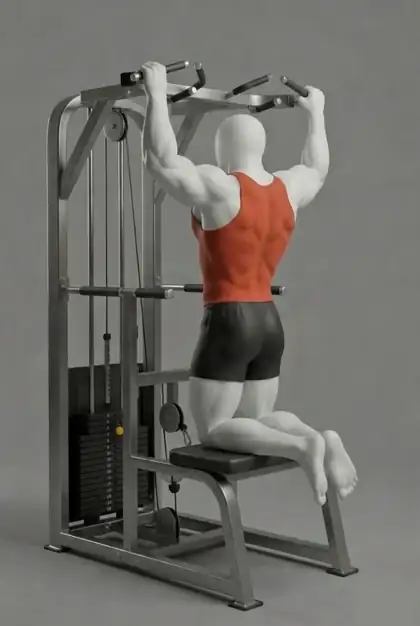
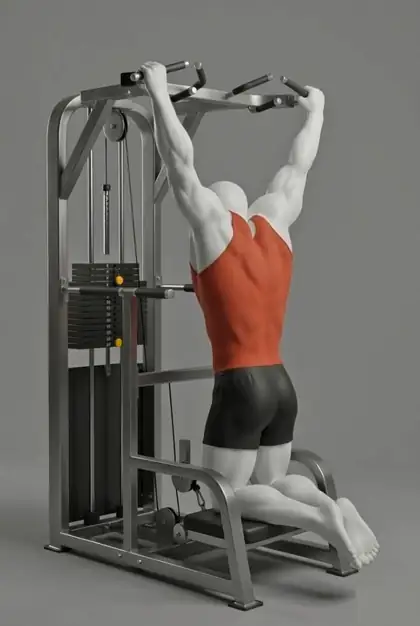
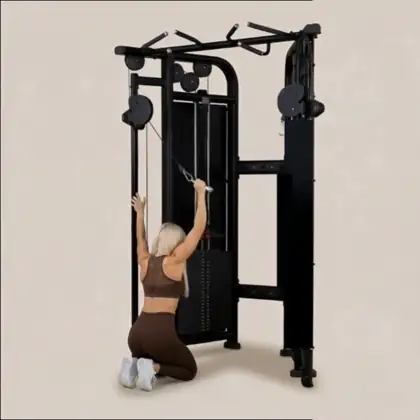
Assisted pull-up
Pull-up with assistance to reduce the effective load.
Form. Use enough assistance to keep the range and control.
Common mistake. Only coming up halfway because of too little assistance.
Neutral-grip pull-up
Vertical pull with neutral handles.
Form. Keep a comfortable elbow path and control the descent.
Common mistake. Swinging the legs to complete reps.
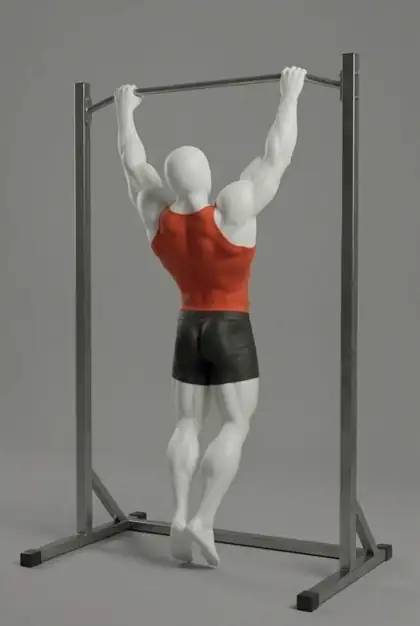
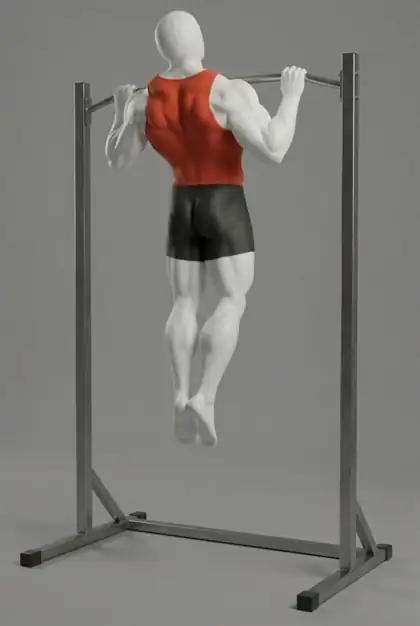
Wide-grip pull-up
Pull-up with an overhand grip clearly wider than your shoulders, which shortens the range and puts the focus on the lats.
Form. Hang with your hands well wider than your shoulders, engage your shoulder blades and pull your chest toward the bar without swinging; lower with control until your arms are extended.
Common mistake. Going so wide that the shoulder complains, coming up with leg momentum, doing partial reps, or shrugging at the top.
Frequently asked questions
- Does a wide grip build a wider back?
- The idea is everywhere, but changing grip shifts the lats' work very little. The muscle responds to enough sets, done with whichever grip lets you do them well.
- How do I get my first pull-up?
- Combine assistance with negatives: step up from a box and lower yourself over about five seconds. The lat pulldown trains the same movement at a weight you choose.
Other exercises for the same muscles