Plank: how to do it, muscles worked and variations
The plank trains your abdomen without moving it: the rectus abdominis and transversus abdominis support your spine while gravity tries to sag your lower back. It teaches you to fix your trunk, the same skill you need later under a bar.
- Main muscles
- Rectus abdominis, Transversus abdominis, Obliques, Quadratus lumborum
- Secondary muscles
- Deltoid, Gluteus maximus, Gluteus medius, Serratus anterior, Triceps brachii
- Equipment
- Bodyweight, BOSU balance trainer, Weight plate, Stability ball, Medicine ball
- Variations
- 11
How to do it
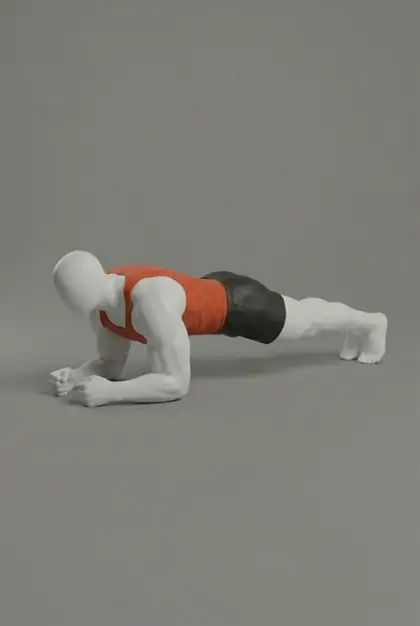
- Rest on your forearms with your elbows under your shoulders and your feet hip-width apart.
- Before you lift, tuck your pelvis slightly, as if bringing your pubic bone towards your navel, and draw your ribs down. That small move changes what you feel completely.
- Lift your knees, tighten your glutes and abdomen, and breathe normally.
- Stop when your hips start to drop or your shoulders sink. Counting seconds beyond that point is the commonest mistake.
Which muscles it works
In the front and high versions the rectus abdominis and transversus abdominis lead, and the High plank also asks for the deltoid, serratus anterior and gluteus maximus. On your side the split changes: the Side plank loads the quadratus lumborum and obliques, while the Straight-arm side plank relies mainly on the obliques.
Which variation to choose
If you cannot yet hold about 20 clean seconds, start with the Wall plank. When the Front plank stops being enough, the Weighted front plank is the easiest to measure, and the Stability ball plank tap adds rotation to resist. For your sides, move up from the Kneeling side plank to the Side plank.
All 11 variations
Front plank
Isometric anti-extension support on the forearms.
Form. Squeeze your abs and glutes keeping a straight body line.
Common mistake. Sinking the lower back or raising the hips too high.
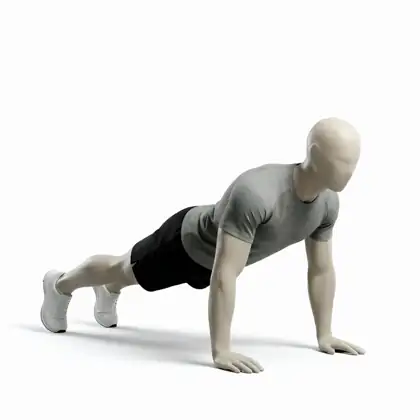
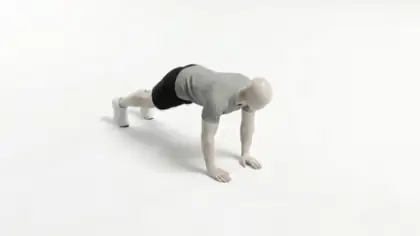
High plank
Anti-extension isometric support with arms extended and hands under the shoulders, the starting position of the push-up.
Form. Place your hands under your shoulders and the tips of your toes down, squeeze your abs and glutes and hold a straight line from head to heels pushing the floor away.
Common mistake. Sinking the lower back, raising the hips, letting the shoulders sink toward the ears, or locking the elbows without pushing the floor.
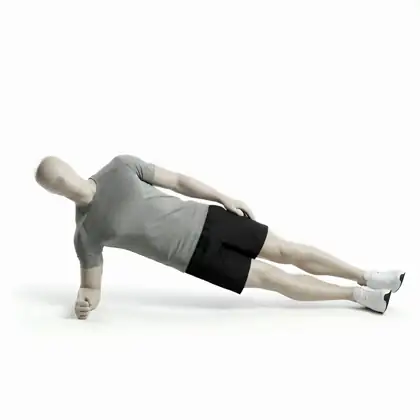
Side plank
Lateral isometric trunk support resting on the forearm.
Form. Rest your forearm with the elbow under the shoulder and your feet stacked, raise your hips until ankles, hips and shoulders line up and hold without letting the hips drop.
Common mistake. Letting the hips drop, putting the elbow ahead of the shoulder, turning the chest toward the floor, or sinking the supporting shoulder.
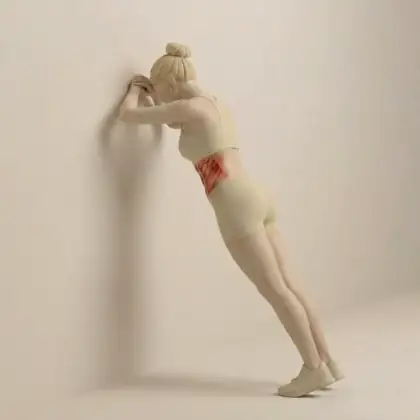
Wall plank
Plank with the forearms against a wall, the most accessible progression to learn the plank position.
Form. Rest your forearms on the wall and walk your feet back until your body leans, keep a straight line from head to heels with active glutes and abs and hold.
Common mistake. Letting the hips drop, pushing the glutes back, or sinking the shoulders.
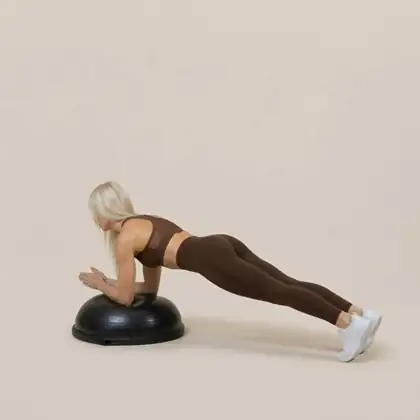
BOSU forearm plank
Front plank with the forearms on the dome of a BOSU, which adds instability to the anti-extension support.
Form. Rest your forearms in the center of the dome with your feet back, align head, hips and heels and hold squeezing your abs and glutes without the BOSU rocking.
Common mistake. Sinking the lower back, resting the elbows on the edge, raising the hips, or compensating for the wobble with the shoulders.
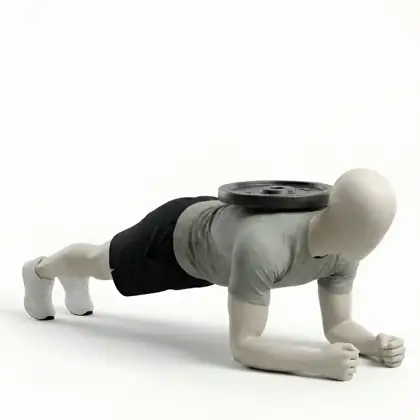
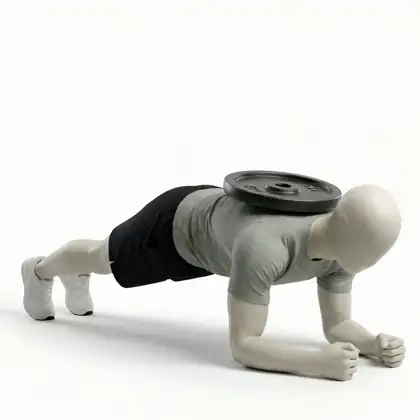
Weighted front plank
Forearm plank with a weight plate resting on the upper back, which increases the anti-extension demand on the core.
Form. Place the plate from a safe position or with help, rest it between your shoulder blades, stack your shoulders over your elbows and keep your glutes and abs active with a neutral pelvis the whole time.
Common mistake. Adding load before mastering the unweighted plank, letting the lower back sink, raising the hips to ease the effort, or resting the plate on the lower back.
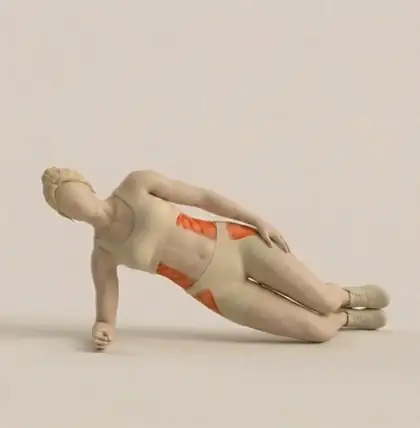
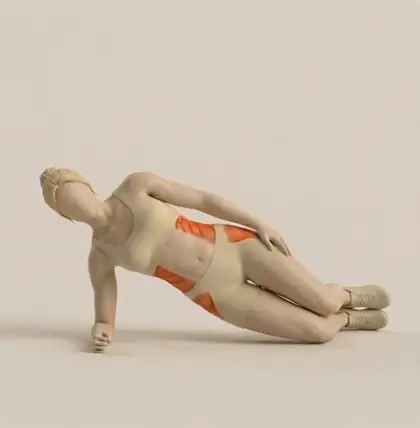
Kneeling side plank
Side plank resting on the knees, a more accessible progression than the full side plank.
Form. Lie on your side resting on your forearm with your knees bent, raise your hips until knees, hips and shoulders line up and hold; switch sides.
Common mistake. Letting the hips drop, pushing the supporting shoulder forward, or turning the trunk toward the floor.
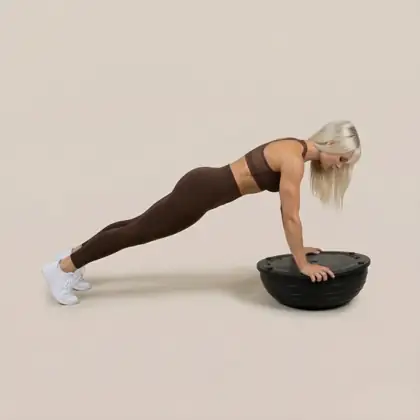
High plank with hands on a BOSU
Plank with arms extended and hands on the dome of a BOSU, which demands shoulder and core stability.
Form. Place your hands on the dome under your shoulders and your feet back; with your body in a line, push into the dome and hold without letting the BOSU tilt.
Common mistake. Sinking the hips, leaving the shoulders behind the hands, locking the elbows, or straining the neck by looking ahead.
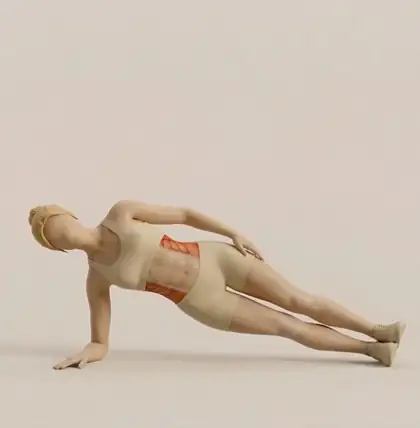
Straight-arm side plank
Side plank resting on the hand with the arm extended instead of the forearm, which demands more shoulder stability.
Form. Place your hand under your shoulder with the arm extended and your feet stacked, raise your hips until ankles, hips and shoulders line up and hold while pushing the floor away.
Common mistake. Letting the hips drop, placing the hand ahead of the shoulder, sinking into the shoulder over a locked elbow, or turning the chest toward the floor.
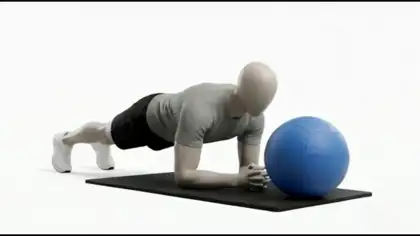
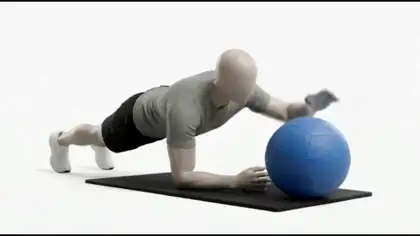
Stability ball plank tap
Forearm plank on a stability ball where you alternate tapping with one hand, raising the anti-rotation demand.
Form. Start with your forearms firm on the ball, widen your feet if you need more base and alternate one hand without letting the ribs turn.
Common mistake. Using a ball with no free space around it, raising the hips too much, letting the lower back drop, or moving on when the ball is already drifting.
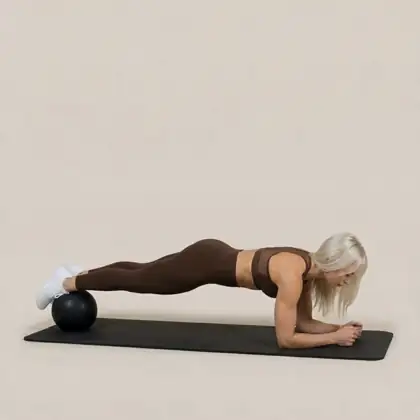
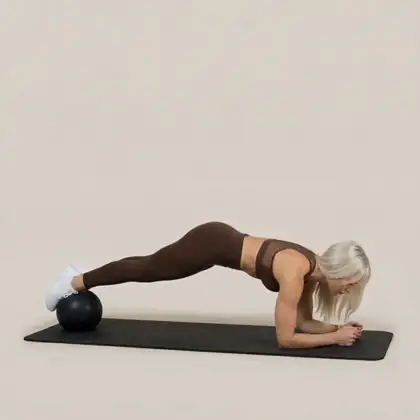
Forearm plank with feet on a medicine ball
Forearm plank with the feet raised on a medicine ball, which adds height and instability to the support.
Form. Rest your forearms under your shoulders and place the tips of your feet on the ball; align your body and hold without letting the ball roll.
Common mistake. Sinking the lower back, raising the hips to compensate, placing the ball too far away, or moving the feet.
Frequently asked questions
- How long should you hold a plank?
- No figure has been shown to suit everyone. By convention, many coaches move you to a harder version at around 60 clean seconds. Holding for three minutes with a sagging lower back adds nothing.
- Does it burn belly fat?
- Not locally. It trains the muscle, but fat in that area depends on your whole body's energy balance. The calorie and macro calculator gives you a starting point.
- Is it normal to feel it in my lower back?
- It usually means your hips have dropped. If the discomfort stays, ask a professional.
Other exercises for the same muscles