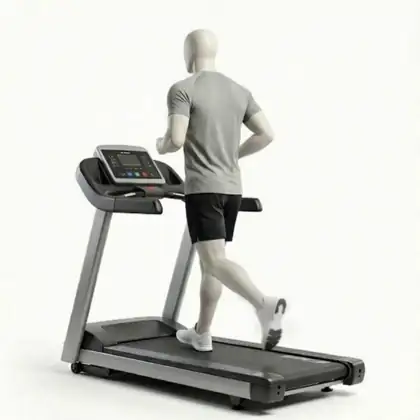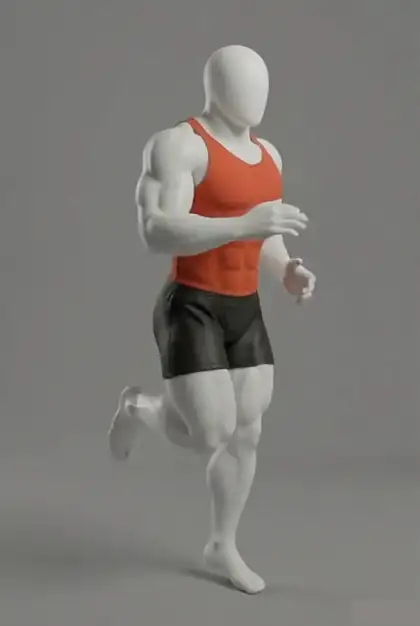
Leg press: how to do it, muscles worked and variations
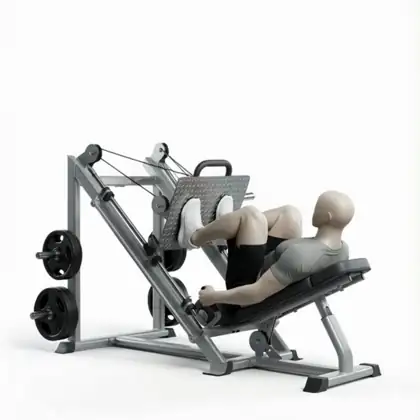
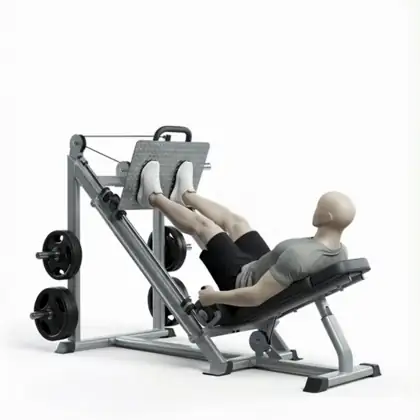
Seated with your back supported, you push a platform away with your feet. The leg press mainly trains the quadriceps, helped by the gluteus maximus, and lets you load your legs when your trunk or balance would hold you back in a squat.
- Main muscles
- Quadriceps, Adductors, Gluteus maximus
- Secondary muscles
- Hamstrings
- Equipment
- Plate-loaded machine, Leg press machine
- Variations
- 4
How to do it
- Adjust the backrest so your hips and whole back stay in contact.
- Put your feet shoulder-width apart in the middle of the platform, with the whole foot down.
- Release the safeties and lower with your knees following your feet. Your pelvis sets the limit: once it starts to lift and your lower back rounds, you are there.
- Push through the whole foot and stop just short of fully straight. Lots of plates and a quarter of the range is the classic mistake on this machine.
Which muscles it works
The quadriceps carry the load in the standard, close-stance and single-leg versions. With a wide stance, the adductors and gluteus maximus join the main muscles. The hamstrings contribute little, because they lengthen at the knee while they shorten at the hip.
Which variation to choose
The Standard leg press does nearly everything. The Wide-stance leg press suits you if you want more adductors and glutes. The Close-stance leg press targets the quads, as long as your heels stay down. The Single-leg leg press stops one leg helping the other.
All 4 variations
Standard leg press
Knee-dominant pattern on a machine.
Form. Control the depth without lifting your pelvis.
Common mistake. Locking the knees violently.
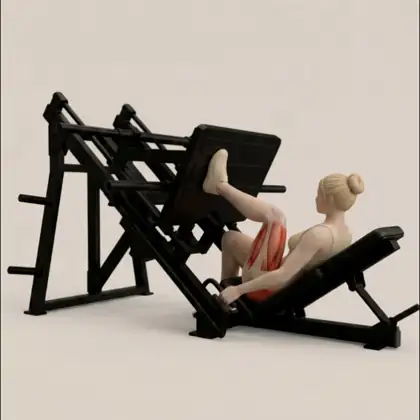
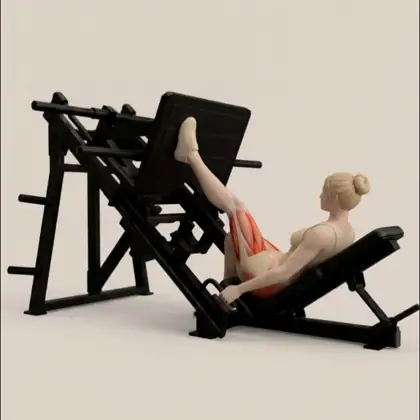
Single-leg leg press
Single-leg leg press.
Form. Keep the pelvis stable and push with the whole foot.
Common mistake. Rotating the hip or locking the knee abruptly.
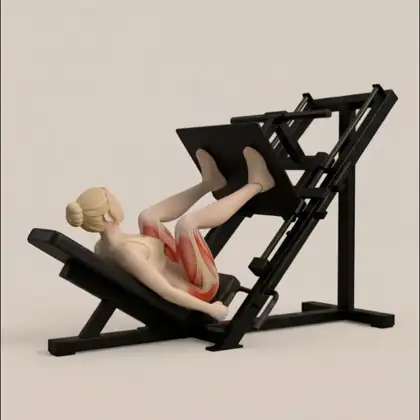
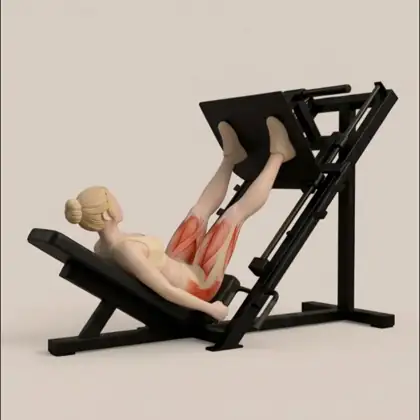
Wide-stance leg press
Leg press with feet wider than the hips and slightly turned out, which increases adductor and glute involvement.
Form. Place your feet wide on the platform with your toes slightly out, release the safeties, lower with your knees tracking in the direction of your feet and push without locking the knees at the end.
Common mistake. Letting the knees cave in, lifting the lower back off the backrest at the bottom, locking the knees, or going so wide that you lose control.
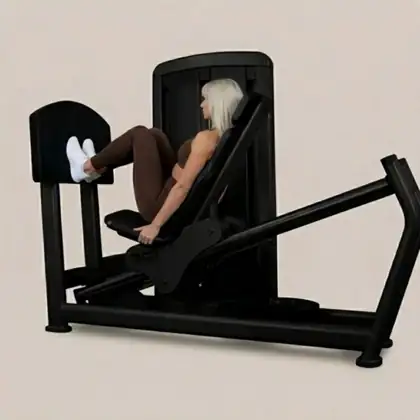
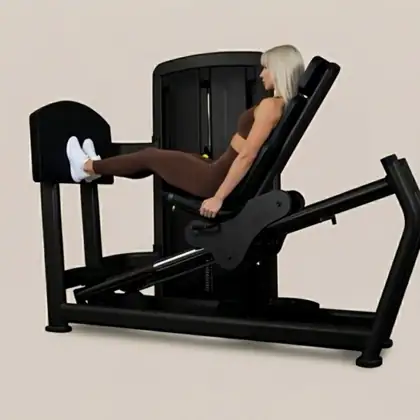
Close-stance leg press
Leg press with a narrower stance.
Form. Keep your knees aligned and the range comfortable.
Common mistake. Going so narrow that knee stability is lost.
Frequently asked questions
- Why can I move so much more than on a squat?
- On a 45-degree sled you only push the part of the load acting along the rails, about 71% (the sine of 45 degrees). Before counting the sled and friction, 200 kg of plates comes to around 141 kg. You are not carrying your torso either, so the numbers do not compare with your squat.
- Where should my feet go?
- High up means more hip and glute; low down means more knee and quad, as long as your heels stay on.
Other exercises for the same muscles