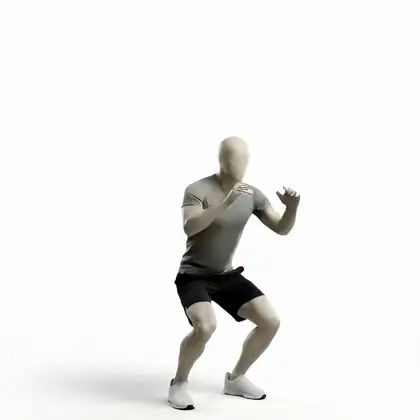
Lunges: how to do it, muscles worked and variations
One leg does nearly everything and the other helps you balance. Lunges train the quadriceps and gluteus maximus with far less load than a squat, and they quickly show whether one side lags behind the other.
- Main muscles
- Quadriceps, Gluteus maximus, Biceps brachii
- Secondary muscles
- Hamstrings, Adductors, Deltoid, Obliques, Brachialis
- Equipment
- Dumbbell, Barbell, Box or step, Kettlebell
- Variations
- 6
How to do it
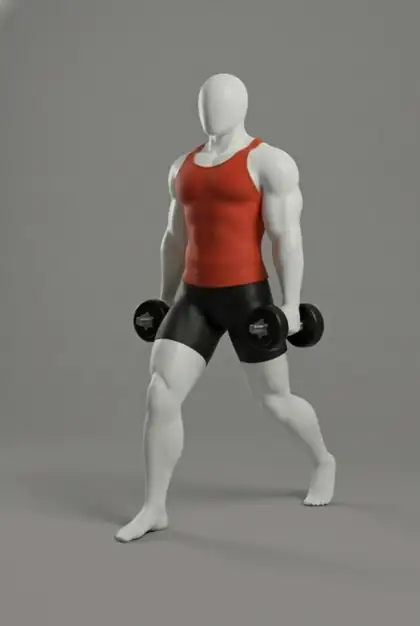
- Stand with your feet hip-width apart. Picture two rails, one for each foot: lining them up, as on a tightrope, explains most of the wobbling.
- Take a long step back and land on the ball of your rear foot.
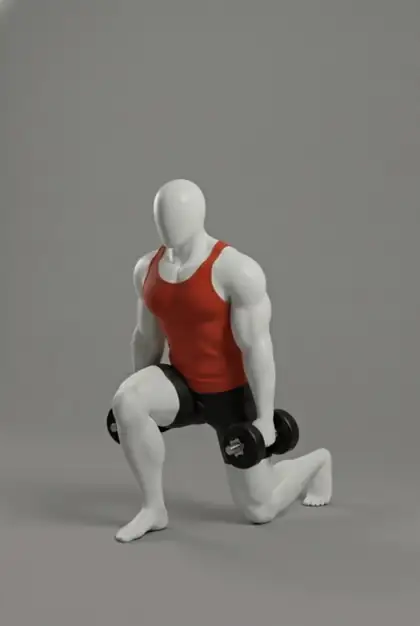
- Lower your back knee until it nearly brushes the floor, with your front foot flat.
- Come up by pushing through the whole front foot. The rear one barely pushes.
Which muscles it works
The quadriceps and gluteus maximus share the main work, with the adductors and hamstrings in support. A long step with a slight trunk lean tends to load the glutes more; a short step with an upright trunk shifts it to the quads. With the weight on one side, the obliques and quadratus lumborum stop you bending, and the curl adds the biceps brachii.
Which variation to choose
The Dumbbell reverse lunge is the easiest to control, and many knees find it more comfortable than stepping forwards. The Walking lunge adds rhythm but needs space. After that, the Deficit reverse lunge with dumbbells gives more range and the Suitcase kettlebell reverse lunge adds trunk work. The Lunge with alternating biceps curl and the Landmine reverse lunge with twist fit better in a circuit.
All 6 variations
Walking lunge
Chained lunges moving forward.
Form. Keep consistent steps and a stable torso.
Common mistake. Speeding up and losing depth or control.
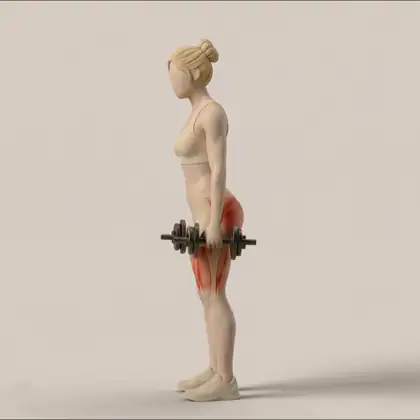
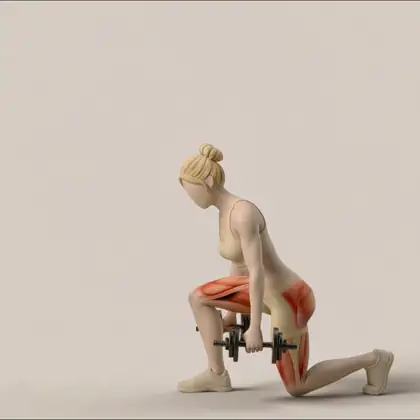
Dumbbell reverse lunge
Lunge stepping backward with dumbbells.
Form. Control the descent and return pushing with the front leg.
Common mistake. Leaning or losing knee alignment.

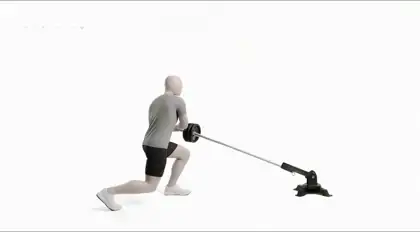
Landmine reverse lunge with twist
Reverse lunge while the end of a landmine bar is swung toward the side of the front leg, combining leg strength and rotation control.
Form. Hold the end of the bar at chest height, take a controlled step back and, as you lower, rotate the trunk from the ribs bringing the bar toward the front leg; return to center on the way up and alternate sides.
Common mistake. Turning only with the arms, letting the front knee drift inward, losing balance from a step that is too short, or using a load that drags the trunk.
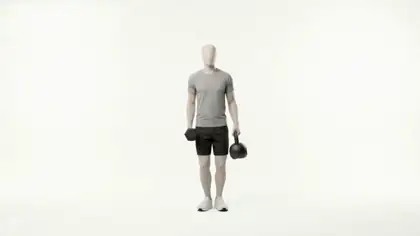

Lunge with alternating biceps curl
Alternating lunge with dumbbells that adds a biceps curl on every rep, combining leg and arm in one movement.
Form. With a dumbbell in each hand, lunge, lower the back knee and curl with the arm opposite the front leg; return and alternate.
Common mistake. Losing trunk posture while curling, letting the front knee sink, swinging the dumbbells, or shortening the lunge.
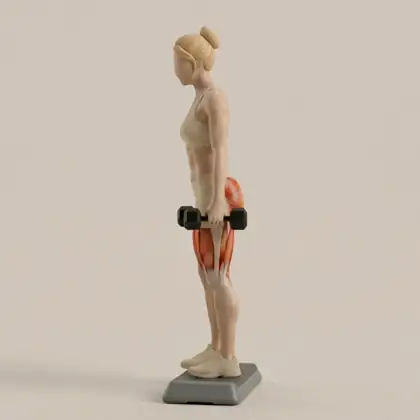
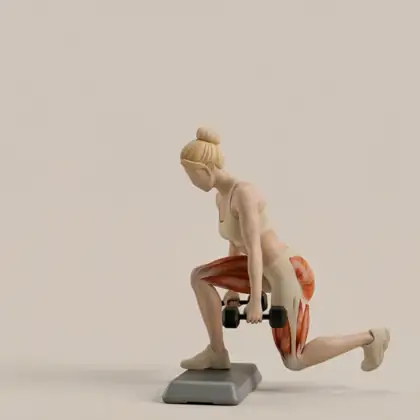
Deficit reverse lunge with dumbbells
Reverse lunge starting from a low step, which increases the range of the front leg and the demand on the glute and quads.
Form. Standing on a low step with a dumbbell in each hand, step back lowering the back knee toward the floor and push through the front foot to return to the step.
Common mistake. Using a step that is too high, leaning the trunk excessively, letting the front knee sink inward, or losing balance on the way up.
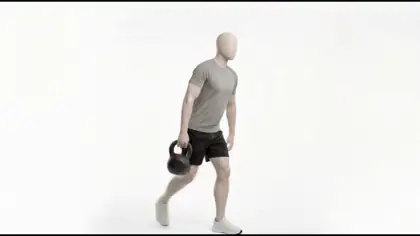
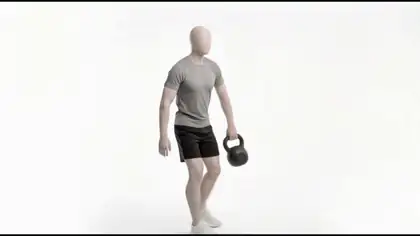
Suitcase kettlebell reverse lunge
Alternating reverse lunge holding a kettlebell at one side of the body, which adds an anti-lateral-lean demand.
Form. With the kettlebell in one hand beside your hip, step back lowering the back knee and return pushing with the front leg, without leaning toward the load; switch hands between sets.
Common mistake. Leaning the trunk toward the kettlebell, letting the front knee sink, hitting the floor with the knee, or shortening the step.
Frequently asked questions
- Can your knee go past your toes?
- Yes, and with a short step or long legs that is normal. Stopping it at all costs just moves the load elsewhere. Check that your heel stays down and your knee follows your foot; if something bothers you, shorten the range or ask a professional.
- Do you count reps per leg?
- Per leg is the usual way: 10 a side makes 20 lunges. Write it down the same way each time so you can compare.