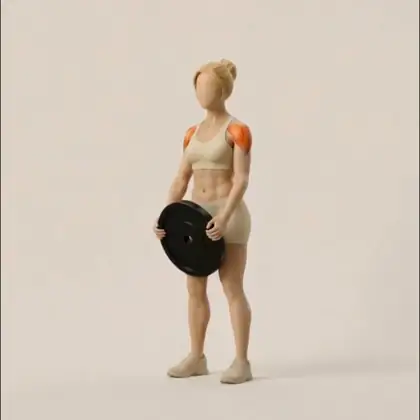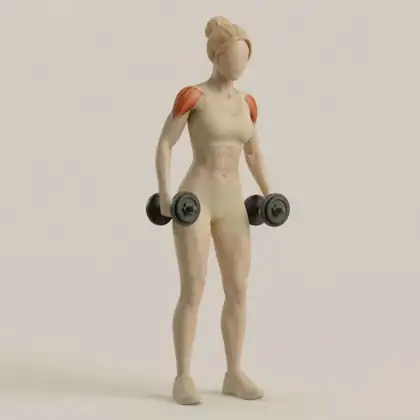
Face pull: how to do it and what it works
You pull a rope towards your forehead with your elbows high. The face pull trains the rear of the deltoid and the trapezius, with the rhomboids and infraspinatus helping, muscles that pressing asks little of.
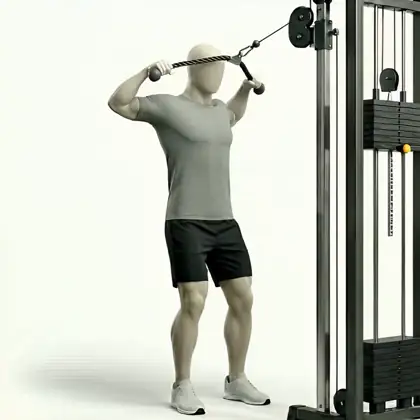
How to do it
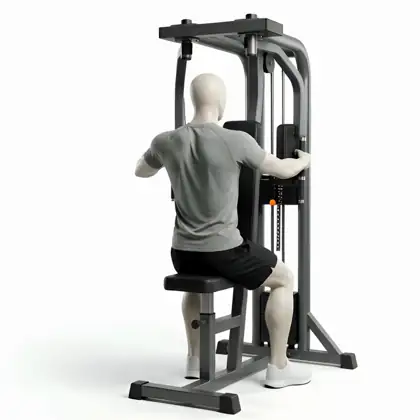
- Set the pulley slightly above your forehead and attach the rope.
- Hold the ends with your palms facing down or towards each other and take a couple of steps back, until you feel tension with your arms straight.
- Pull towards your forehead, drawing your hands apart, with your elbows at shoulder height or a little higher.
- Finish with your hands beside your ears, as if showing off your biceps, and hold for a moment.
- Return slowly. What usually spoils it is the load: with too much weight your body leans back and your hands never get past your face.
Which muscles it works
The deltoid and trapezius lead, the first through its rear part and the second through its middle and lower fibres. The infraspinatus turns your arm outwards in the last part of the pull, which is why that hands-back finish matters. There lies the difference from a row, where your elbows travel lower and the lats do more.
How to do it
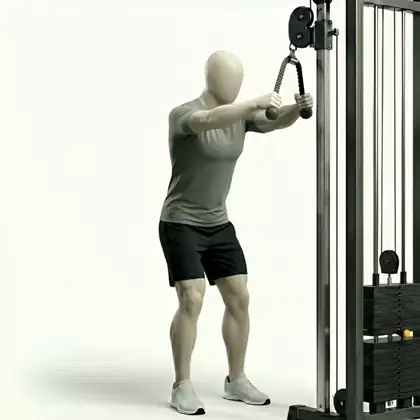
High-rope face pull
Pull toward the face with a rope.
Form. Pull toward the upper area keeping your shoulders away from your ears.
Common mistake. Turning it into a heavy row without shoulder control.
Frequently asked questions
- How much weight should I use?
- Not much compared with a row: whatever lets you reach the finish and hold it for a moment. Sets of 12 to 20 reps are usual, which is a convention and not a figure from research.
- Does it fix your shoulders?
- That is the common claim, but it is muscle work and nothing more. If your shoulder hurts, what you need is a professional to look at it.