Lateral raises: how to do it, muscles worked and variations
A small exercise with a specific job: giving work to the side of the deltoid, which gets far less from pressing than the front does. It is done light, and nearly every mistake comes from wanting to add weight too fast.
- Main muscles
- Deltoid
- Secondary muscles
- Trapezius
- Equipment
- Dumbbell, Selectorized machine, Cable
- Variations
- 4
How to do it
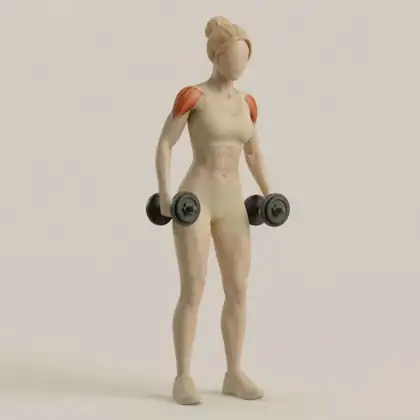
- Stand with a dumbbell in each hand, bend your elbows slightly and leave them there.
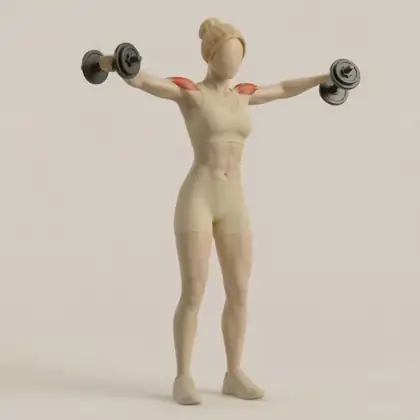
- Raise your arms out to the sides and slightly in front of your body, leading with the elbow. That small angle usually feels better on the shoulder.
- Stop around shoulder height, with your elbow and hand at roughly the same level.
- Lower more slowly than you lifted. This is the part you give away when the weight is too heavy: your body swings, your shoulders climb and the dumbbells drop.
Which muscles it works
The deltoid does the work in all of them, with its side portion leading as your arm moves away from your body, and the trapezius helps rotate the shoulder blade. With a dumbbell there is almost no tension at the bottom, where your arm hangs, and the load arrives as you near horizontal. A cable pulls from the start.
Which variation to choose
The Dumbbell lateral raise is the default. The Single-arm cable lateral raise keeps tension in the bottom range, and the Machine lateral raise removes the swing. The Dumbbell lateral raise to front raise adds front-delt work you already get from pressing.
All 4 variations
Dumbbell lateral raise
Shoulder abduction with dumbbells.
Form. Lift with control to a comfortable range without momentum.
Common mistake. Shrugging your shoulders to move more load.
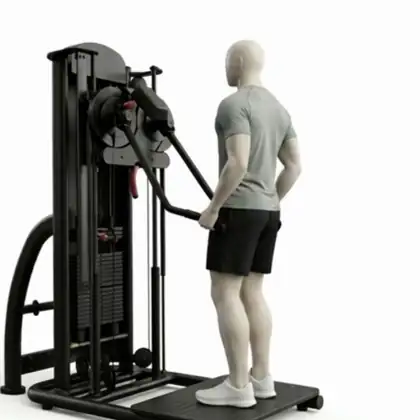
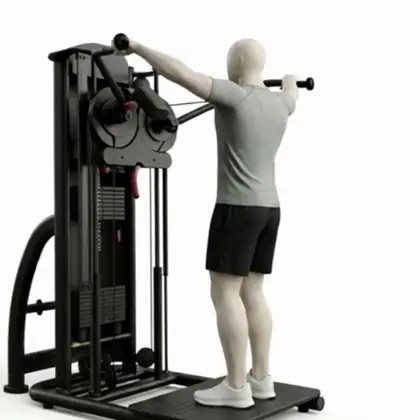
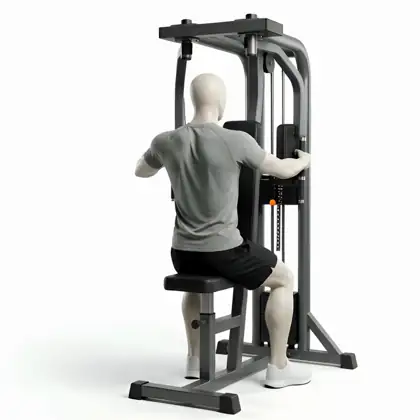
Machine lateral raise
Guided lateral raise on a machine.
Form. Adjust the pads and move without bouncing.
Common mistake. Raising beyond the range you can control.
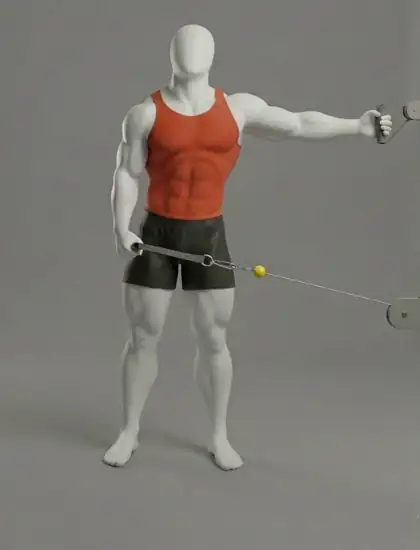
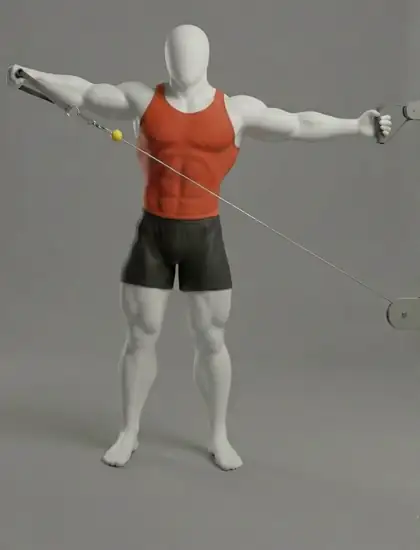
Single-arm cable lateral raise
Single-arm lateral raise with a cable.
Form. Set the cable low and keep continuous tension.
Common mistake. Turning the trunk to start the movement.
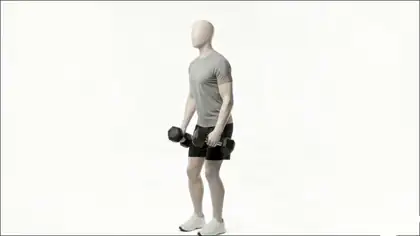

Dumbbell lateral raise to front raise
Combination of a lateral raise and a front raise in the same rep that works the middle and front parts of the deltoid.
Form. With light dumbbells, raise your arms out to the sides to shoulder height, lower them, then raise them in front and lower again; keep your elbows slightly bent and your trunk still.
Common mistake. Using loads that make you swing, raising above shoulder height by shrugging, locking your elbows, or rushing with no pause between directions.
Frequently asked questions
- Should you tilt your wrist as if pouring a jug?
- No need. It is an old tip, and with the hand turned that far many shoulders complain. Keep your hand roughly parallel to the floor.
- How much weight should I use?
- Whatever you can lift without swinging. The jumps are big in proportion: 8 to 10 kg is 25% more. Adding reps first usually works better, as in progressive overload.
- Can you raise your arms above your shoulders?
- If it causes no discomfort, yes, although the trapezius takes more of the work from there.