Pike push-up: how to do it, muscles worked and variations
Push with the hips raised that loads the shoulders more.
- Main muscles
- Deltoid, Triceps brachii
- Secondary muscles
- Pectoralis major, Trapezius
- Equipment
- Bodyweight, Flat bench
- Variations
- 3
All 3 variations
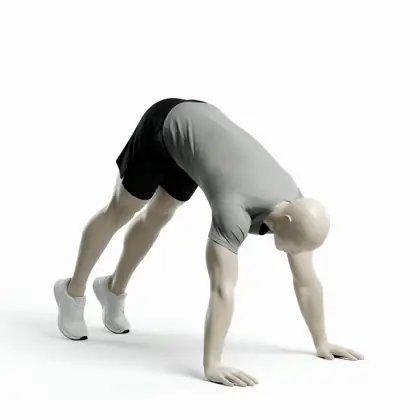
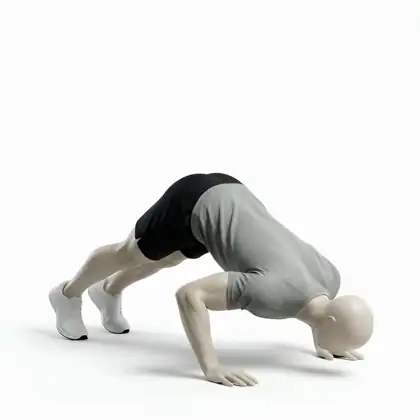
Pike push-up
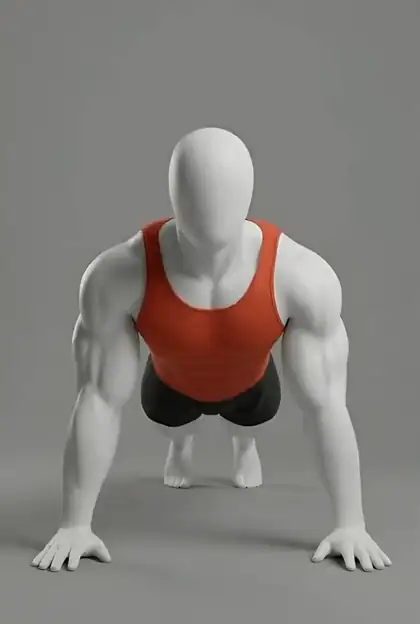
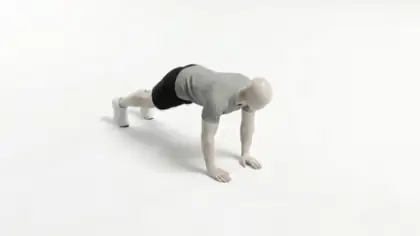
Push-up with raised hips that approximates the vertical push pattern with bodyweight.
Form. Raise your hips, bring your head toward the floor in front of your hands and push without collapsing the neck or lower back.
Common mistake. Turning it into a horizontal push-up, flaring the elbows without control, or losing the high hips.
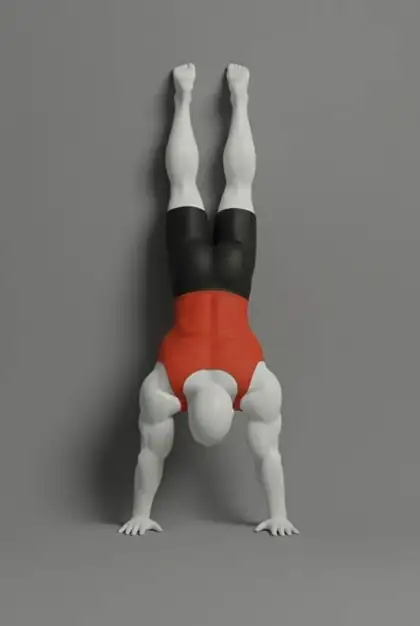
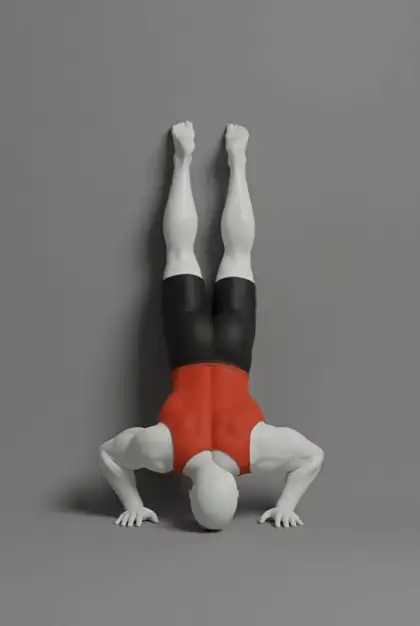
Handstand push-up
Vertical push-up in a handstand, usually against a wall, that loads the shoulders with your full bodyweight.
Form. Kick up into a handstand facing or with your back to the wall with your hands slightly wider than your shoulders, lower with control until your head nears the floor forming a triangle with your hands and push until your arms are extended.
Common mistake. Trying it without first mastering pike push-ups and the handstand, landing your head suddenly, arching the lower back a lot, or flaring the elbows out.
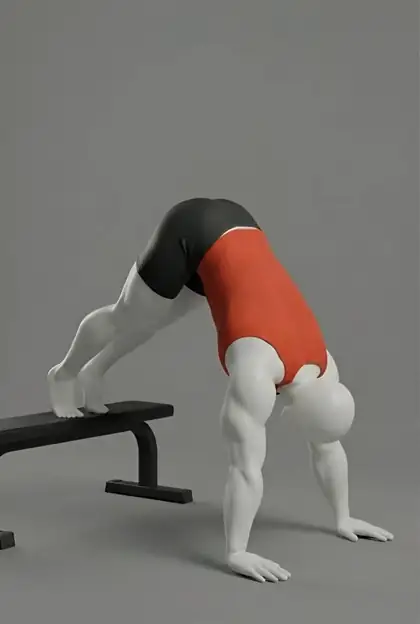
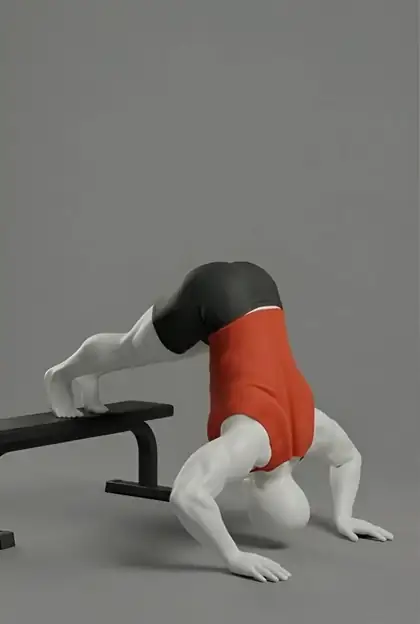
Feet-elevated pike push-up
Pike push-up with your feet on a bench or box, which makes the trunk more vertical and brings the movement closer to an overhead press.
Form. Rest your feet on a bench, walk your hands in until your hips are over your shoulders and lower your head toward the floor in front of your hands before pushing.
Common mistake. Leaving the hips low so it becomes a regular push-up, flaring the elbows, hitting your head, or raising your feet higher than you can control.