Push-ups: how to do it, muscles worked and variations
All you need is the floor. Push-ups train the pectoralis major, with the deltoid, triceps brachii and serratus anterior helping, while the rest of your body holds rigid.
- Main muscles
- Pectoralis major, Triceps brachii
- Secondary muscles
- Deltoid, Serratus anterior, Forearm flexors, Obliques
- Equipment
- Bodyweight, Weight plate, Suspension trainer, Dumbbell
- Variations
- 14
How to do it
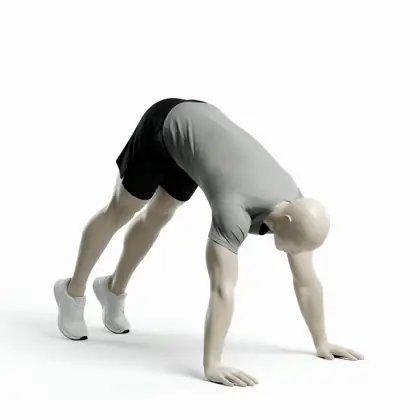
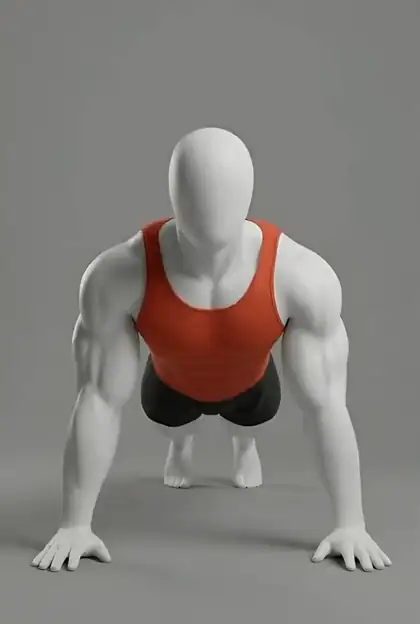
- Set your hands slightly wider than your shoulders, level with your lower chest.
- Straighten your legs and tighten your glutes and abdomen so that shoulders, hips and heels form a line.
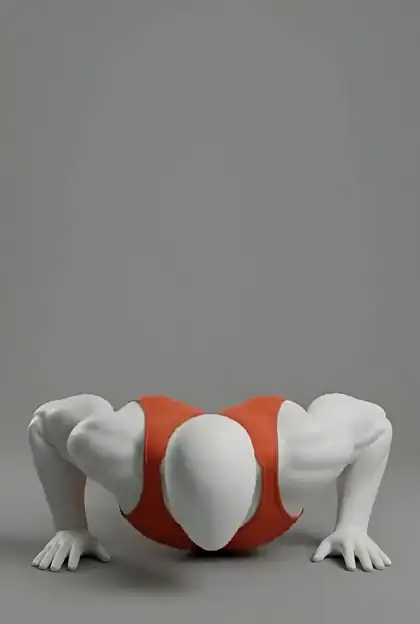
- Lower with your elbows about 45 degrees from your trunk until your chest is a fist from the floor.
- Push until your arms are straight and then a little further, spreading your shoulder blades. That last bit works the serratus anterior, and most people skip it.
- If your hips sag or your neck pokes forward, move to an easier version. Counting reps that are no longer push-ups is the old mistake.
Which muscles it works
In nearly all of them the pectoralis major leads, with the deltoid and triceps brachii behind it. Bringing your hands together changes the order: in the Close-grip push-up the triceps take over. Raising your feet puts more weight on your hands, and raising your hands takes it off.
Which variation to choose
If you cannot yet string ten clean reps together, start with the Incline push-up on a bench. Next come the Standard push-up and then the Decline push-up or the Weighted push-up. If your wrists bother you, the Push-up on dumbbells or the Parallette push-up keep them straight. The Clap push-up is about power, so save it for short sets when you are fresh.
All 14 variations
Standard push-up
Bodyweight push from the push-up position.
Form. Keep your body in one block and push the floor away.
Common mistake. Sinking the lower back or flaring the elbows excessively.
Weighted push-up
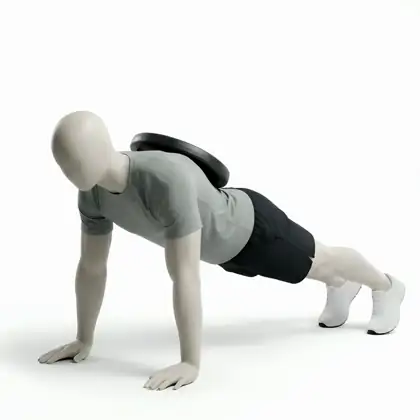
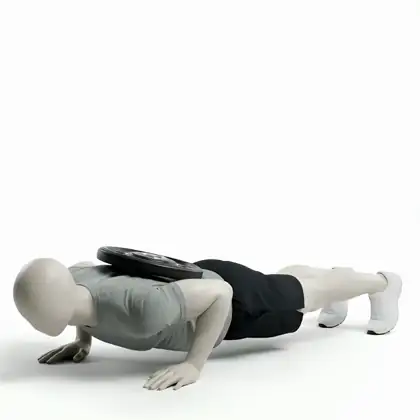
Push-up with a weight plate resting on the upper back, a progression for continuing to build strength when strict push-ups feel easy.
Form. Ask for help placing the plate between your shoulder blades, keep your body rigid from head to heels and do full push-ups making sure the plate does not slide.
Common mistake. Resting the plate on the lower back, letting the hips drop, adding load before mastering the full range, or losing plate stability.
Clap push-up
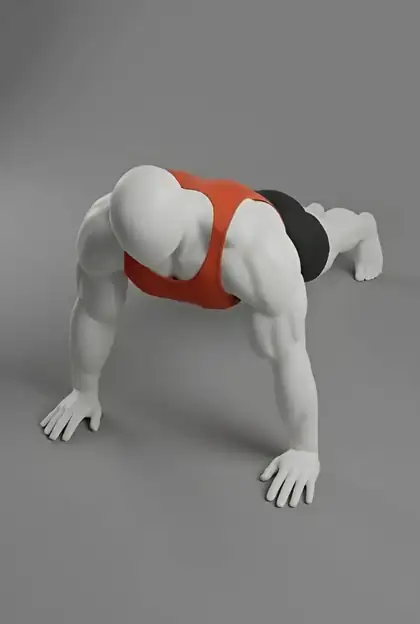
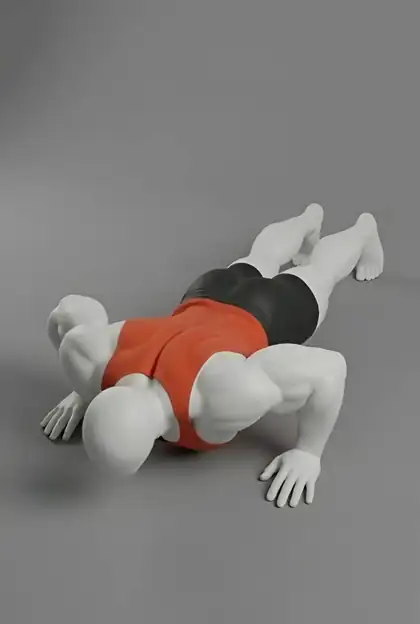
Explosive push-up where the hands leave the floor to clap before landing again, which builds pushing power.
Form. From a solid plank, lower with control, push hard to lift your hands off, clap quickly and land with slightly bent elbows to cushion.
Common mistake. Trying it without mastering strict push-ups, landing with locked elbows, losing hip alignment, or chaining reps when fatigued.
Suspension push-up
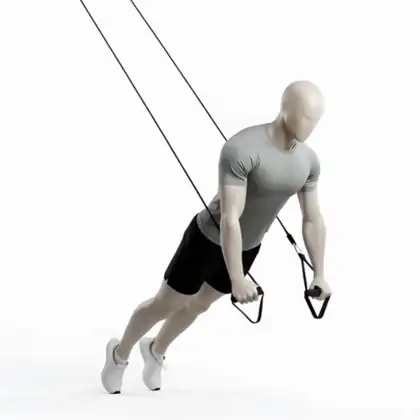
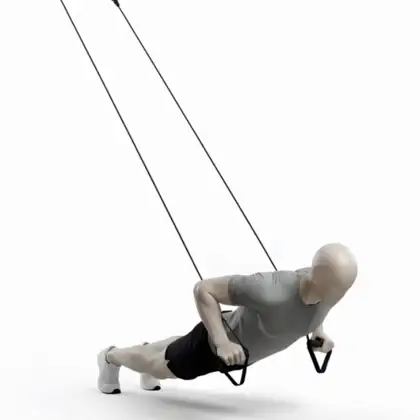
Push-up with your hands on the handles of a suspension trainer; the instability of the straps increases chest, shoulder and core work.
Form. With the straps at mid height, lean forward with your body in one block and the handles under your shoulders; lower with your elbows at about 45° and push until extended without the straps rubbing your arms.
Common mistake. Letting the handles drift apart, sinking the hips, shrugging your shoulders, or choosing an angle you cannot control.
Fingertip push-up
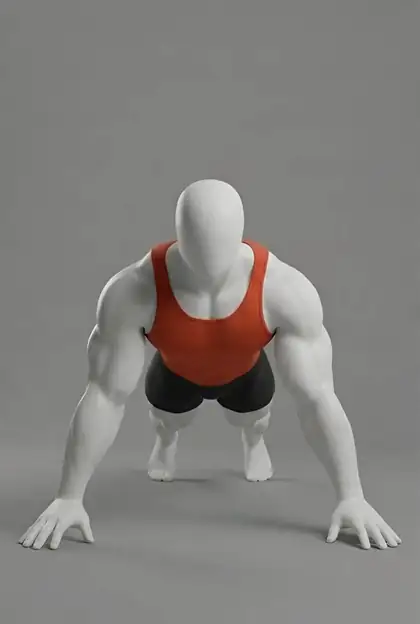
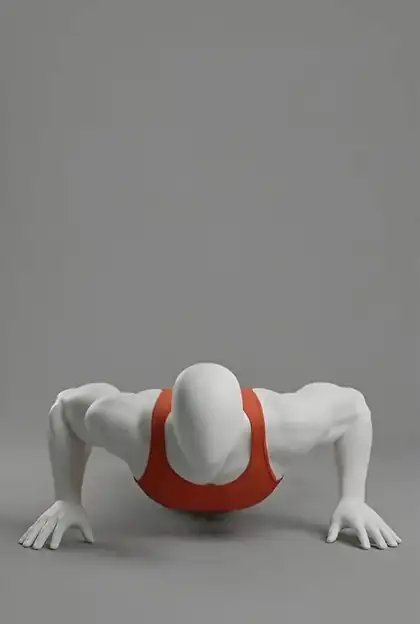
Push-up supported only on the fingertips, an advanced variation that strengthens the fingers and forearms as well as the push.
Form. Spread your fingers in a claw shape under your shoulders and rest only on the tips; with your body in one block, lower with control and push without letting your fingers flatten. Start from your knees if you need to.
Common mistake. Letting the fingers collapse onto the palm, doing more reps than your fingers tolerate, sinking the hips, or bouncing at the bottom.
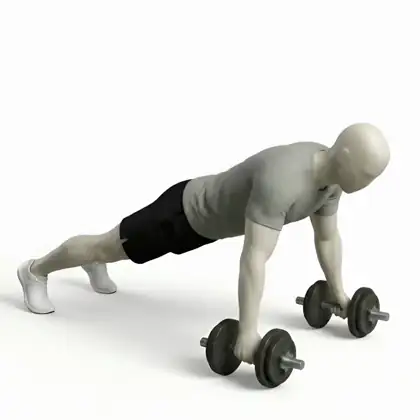
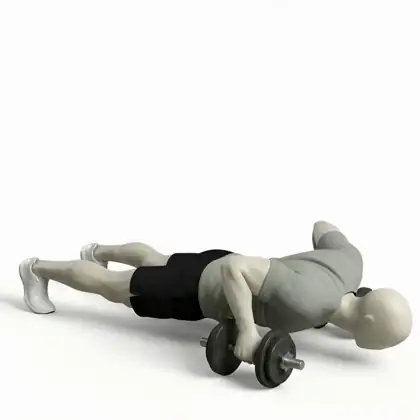
Push-up on dumbbells
Push-up gripping two dumbbells on the floor, which keeps the wrist neutral and lets you lower the chest a bit further.
Form. Place the dumbbells under your shoulders with a neutral grip and check they do not roll; lower with your body in one block until your chest passes slightly below your hands and push.
Common mistake. Using round dumbbells that roll, going lower than the shoulder tolerates, sinking the hips, or flaring the elbows to 90°.
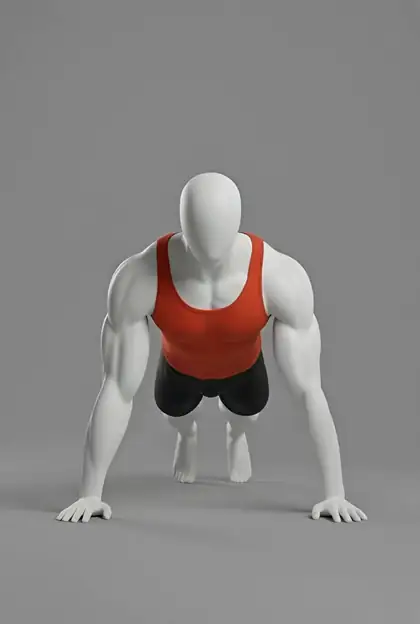
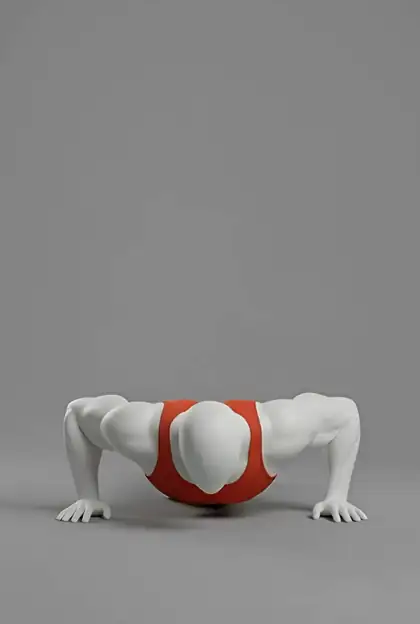
Wide push-up
Push-up with hands well wider than shoulder width, which shortens the elbow path and increases pec work.
Form. Place your hands about one and a half times shoulder width, keep your body aligned and lower your chest toward the floor without letting your elbows flare out in line with your shoulders; push up until extended.
Common mistake. Setting your hands so wide that the shoulder is strained, letting the hips drop, pushing your head forward, or doing partial reps.
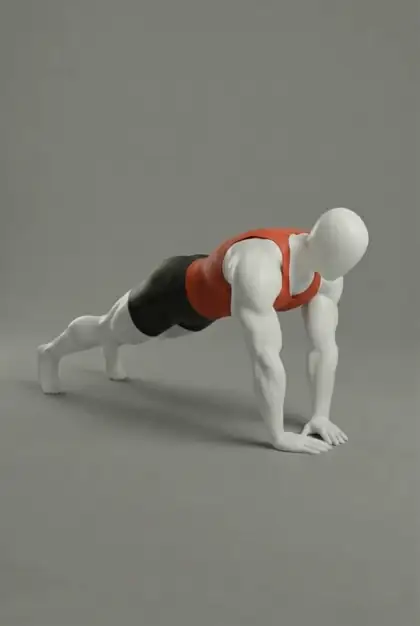
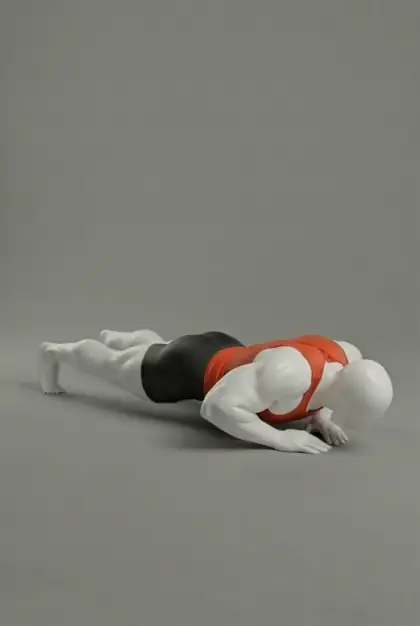
Close-grip push-up
Push-up with hands closer together and a triceps bias.
Form. Keep your elbows close to your body without straining the wrists.
Common mistake. Bringing the hands so close that joint comfort is lost.
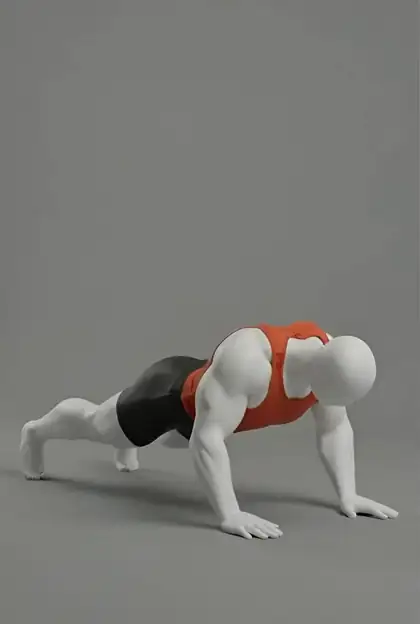
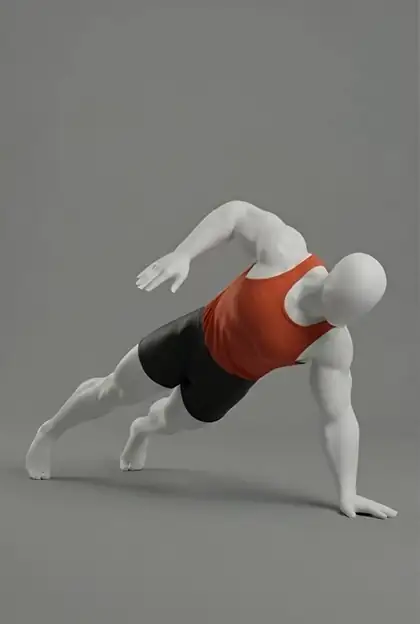
T push-up
Push-up that, on the way up, rotates the body into a side plank raising one arm toward the ceiling, combining pushing and rotational stability.
Form. Do a full push-up and, as you extend your arms, rotate over your feet bringing one arm toward the ceiling to form a T; return to the plank and alternate sides.
Common mistake. Turning only the shoulders and leaving the hips behind, losing body alignment, placing the hand down without control, or rushing the rotation.
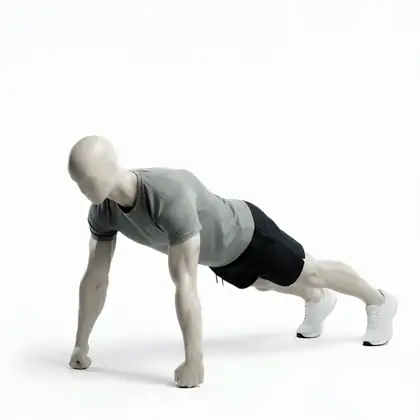
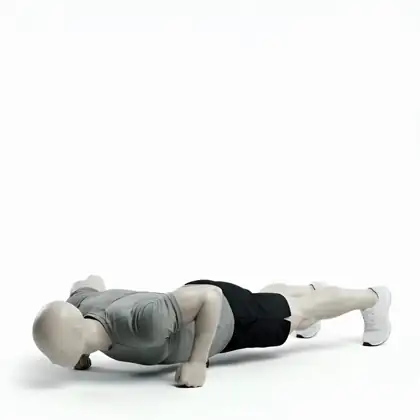
Knuckle push-up
Push-up resting on closed fists on the floor, which keeps the wrist straight.
Form. Close your fists under your shoulders resting on the first two knuckles, keep your wrist aligned with your forearm and do the push-up with your body in one block. Use a padded surface.
Common mistake. Bending the wrist outward, resting on the small knuckles, doing it on a hard floor, or sinking the hips.
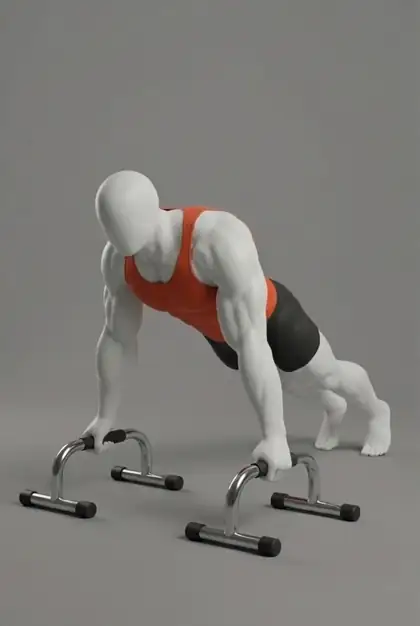
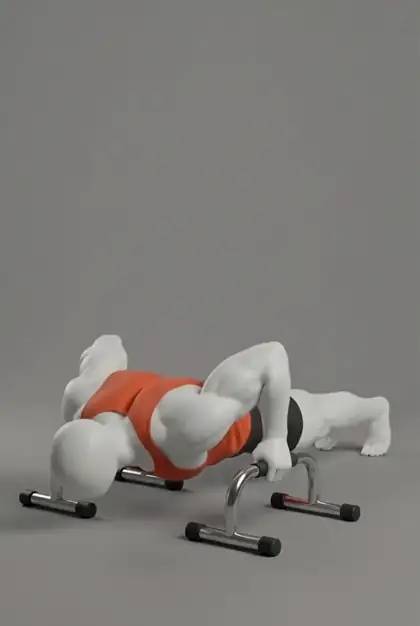
Parallette push-up
Push-up with your hands on low parallettes or supports, which lets you lower the chest further and keep the wrists neutral.
Form. Hold the supports with a neutral grip, form a plank with your body aligned and lower your chest between your hands to a comfortable range before pushing.
Common mistake. Going lower than the shoulder tolerates, letting the hips drop, flaring the elbows excessively, or using unstable supports.
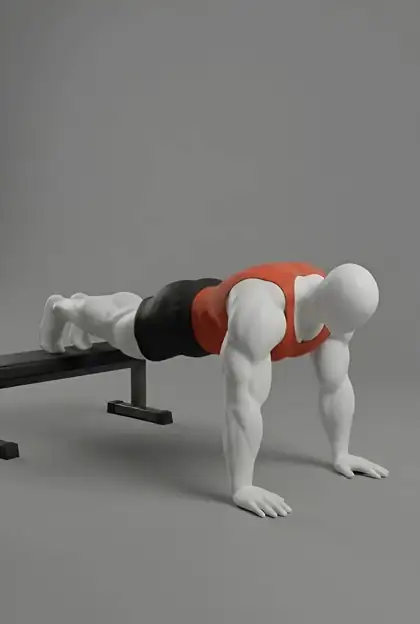
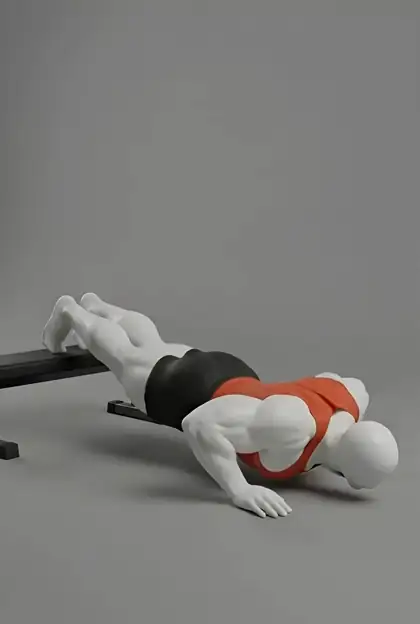
Decline push-up
Push-up with feet raised to increase the load on the upper body.
Form. Keep your ribs controlled and lower with a stable range.
Common mistake. Raising the hips or losing scapular control.
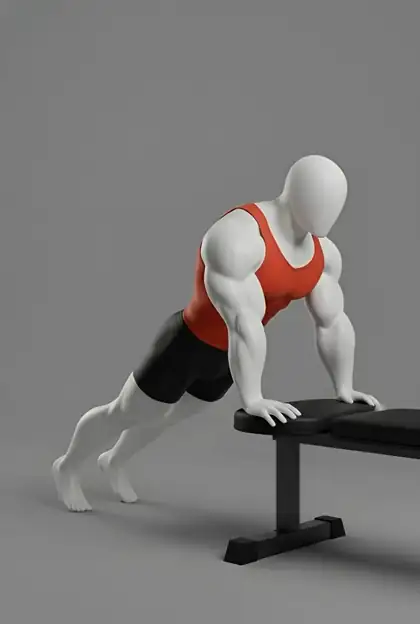
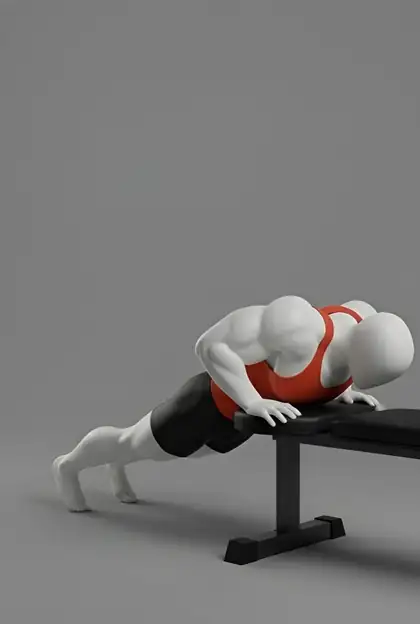
Incline push-up
Push-up with hands raised to reduce the relative load.
Form. Push from a firm body line and control the descent.
Common mistake. Breaking your posture at the hips.
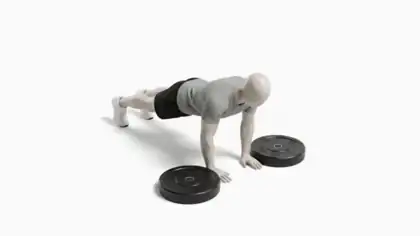
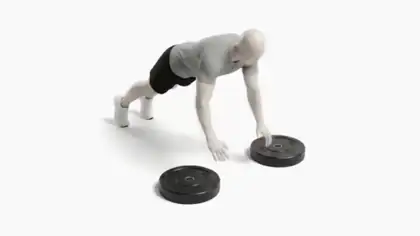
Plyometric push-up onto plates
Explosive push-up where the hands hop from the floor onto two plates placed at the sides and back again, to build pushing power.
Form. With a plate on each side, lower into a push-up and push hard so your hands land on the plates; lower again and hop back to the floor cushioning with your elbows.
Common mistake. Landing with locked elbows, sinking the hips, using plates that slide, or chaining reps without control.
Frequently asked questions
- Can push-ups build muscle?
- Yes, if you take them close to failure. Once lots come easily, make them harder: progressive overload does not need plates.
- How much of my weight am I lifting?
- Less than all of it, because your feet carry some. That is why they do not compare directly with a bench press.
- Do knee push-ups count?
- They work, but incline push-ups keep your body line and let you progress by lowering your hands.